Most radiator leaks come from a valve, a pipe joint or internal corrosion. A simple valve fault is often quick and inexpensive to fix, and typical 2026 repair prices run from £85 to £180 depending on the job. Finding water underneath a radiator is stressful, but understanding where the drip is coming from will help you take the right steps to limit the damage and get it sorted.
Where a radiator leaks from
A radiator is a metal panel filled with water, connected to your central heating pipes by metal joints and valves. Water will find the easiest way out. Heating engineers typically find that leaks appear at one of four common weak points.
The radiator valve or thermostatic valve
The valves at the bottom corners of your radiator control the flow of hot water. One is usually a manual twist cap or a thermostatic radiator valve with numbers on a dial, and the other is a lockshield valve. Leaks often develop around the spindle, which is the internal moving part that opens and closes the water flow.
The pipe joints and connections
Your central heating pipes join the radiator valves using metal nuts and fittings. These are called union joints or compression fittings. A leak here usually looks like a slow, steady drip running down the copper or plastic pipework toward your floorboards or skirting boards.
The bleed valve
At the top corner of your radiator is a small square screw inside a round metal housing. This is the bleed valve, which is used to let trapped air out of the system. If water is weeping from this top corner and running down the side of the metal panel, the bleed valve is failing to hold the water back.
The radiator panel or seam
The main body of the radiator is made from pressed steel or aluminium, welded together at the seams. If water is dripping directly from the middle of the panel, the bottom edge, or a rusted patch on the front, the metal itself has been compromised. This type of leak often leaves a rusty brown stain on the paintwork.
What usually causes a radiator leak
Radiators endure constant changes in temperature and pressure as your central heating switches on and off. Over the years, this environment takes a toll on the metal, the rubber seals and the pipe connections. A heating engineer will look for several common causes when they assess a dripping radiator.
System corrosion is a primary cause of panel leaks. Over time, the water inside your central heating system reacts with the steel radiators to create internal rust. This rust weakens the metal panels from the inside out, eventually causing rust patches, pitting and small perforations in ageing radiators.
This internal rust also mixes with the heating water to create sludge. Sludge build up is another common cause of radiator leaks.
Failing joints and connections are another frequent cause. Pressure imbalance in the system can put strain on the joints and valves, and failing joints and connections can leak.
Finally, worn valve components are responsible for many leaks. The valves contain small rubber seals, washers and valve cores that keep the water watertight. These materials naturally perish, harden and wear out over the years, allowing water to slip past the spindle or the connecting nut.
What to do first when a radiator leaks
A leaking radiator can cause significant damage to your floors, ceilings and belongings if left unchecked. You need to act quickly to catch the water and make the area safe, but you must only take safe user level actions. Follow these steps to limit the damage before a professional arrives.
- Switch your central heating system off at the main controls to stop the pump from pushing more water and pressure through the leaking area.
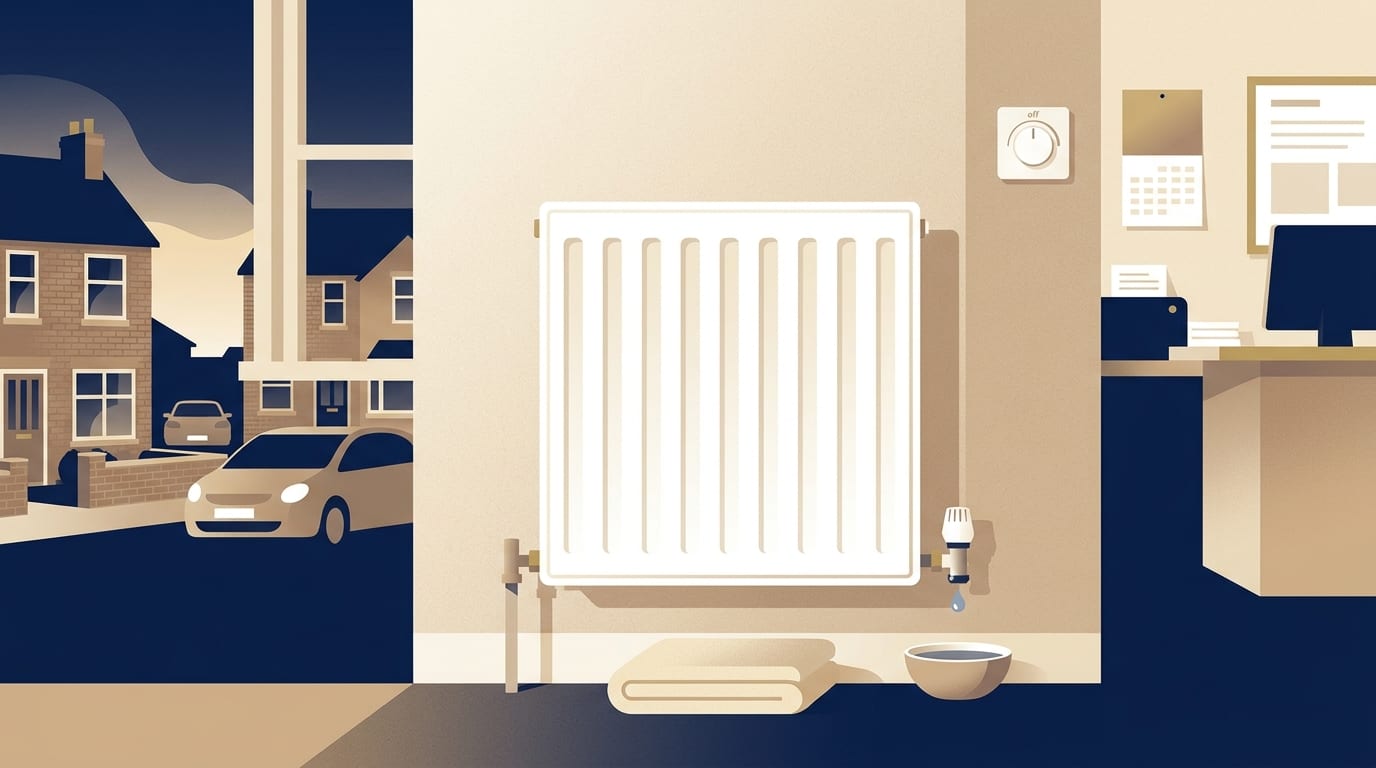
- Put a bowl, a plastic container or a thick towel directly under the drip to catch the water and protect your floor.
- Mop up any standing water that has already pooled on the floorboards or carpets to prevent it from soaking through to the ceiling below.
- Keep water away from electrics, and switch off the electricity at the mains if water has reached any sockets or wiring and it is safe to reach the consumer unit.
- Call a local heating engineer to assess the leak and the wider heating system.
You must not attempt to fix the heating system yourself. Do not drain or refill the central heating system, and do not attempt to remove the radiator from the wall. Do not try to tighten the valve spindle with tools. That is a job for a heating engineer. Never remove the boiler casing or touch the internal boiler components. WaterSafe says that plumbing repairs fall under the water regulations, and that work done incorrectly can worsen a leak or risk contaminating the water supply.
What a heating engineer will check and fix
When a heating engineer arrives, they will first assess the visible leak to find the exact source of the dripping water. They will check the condition of the metal panel, inspect the tightness of the union joints, and examine the valves for signs of perishing seals or internal wear.
If the fault lies with a valve, the engineer will carry out valve related work. For a simple valve problem, tightening or replacing the thermostatic radiator valve or the bleed valve can often resolve the problem quickly and inexpensively. They will replace worn valve components including internal sealing washers, valve cores or the thermostatic parts themselves.
If the leak is coming from the pipe connections, the engineer will renew the joints. This might involve re-soldering or renewing compression fittings. Plumbing repairs also fall under the water regulations.
Crucially, an engineer will also assess the wider heating system. Because a leak is sometimes a symptom and not the cause, they will check for signs of pressure imbalance or heavy sludge build up across the house. Because a leak can be a symptom, a Gas Safe registered engineer should assess the whole heating system, and any work on the boiler is for a Gas Safe registered engineer only.
Repair or replace the radiator
A simple leak does not always mean you need a new radiator. If the metal panel is in good condition and the leak is isolated to a faulty valve or a loose joint, a repair may be all that is needed.
However, corrosion often signals the end of the line. If the radiator panel has rusted through, is showing deep pitting, or is leaking from a welded seam, it may be better replaced than repaired. Radiators older than 15 years show more repair needs, and typical 2026 guidance puts the point where replacement becomes worthwhile at about 15 to 20 years.
The material of your radiator also plays a part in the decision. Aluminium radiators can cost more to repair for leaks, which may tip the balance towards replacement.
System wide issues can also tip the balance toward replacement. If several valves are failing across the house, or the heating system is severely unbalanced, upgrading your radiators and fitting new thermostatic radiator valves may be more cost effective than paying for multiple separate repairs.
How much does a radiator leak repair cost
Repair costs depend on what part of the radiator has failed, how long the job takes, and where you live in the UK. Estimates vary. Some 2026 price lists put labour at £50 to £70 an hour, with minor repairs at £50 to £120, a leak assessment at £70 to £110 and valve related work at £70 to £140. Others put a plumber or heating engineer at £40 to £70 an hour.
The first table shows typical 2026 prices for specific radiator leak repairs.
|
Type of radiator repair |
Typical cost range |
|---|---|
|
Radiator leak sealing |
£100 to £180 |
|
Valve leaks (valve cores, sealing washers or thermostatic parts) |
£100 to £150 |
|
Joint leaks (re-soldering or renewing compression fittings) |
£140 to £180 |
|
Thermostatic valve substitution |
£85 to £150 |
The next table gives different typical 2026 figures, which were compiled differently, so do not combine the two tables. Local quotes will differ based on your location and the exact nature of the fault.
|
Type of radiator repair |
Typical cost and time |
|---|---|
|
Leak repair, labour and parts |
£100 to £180, taking 1.5 to 3 hours |
|
Faulty valve repair |
£85 to £150, taking about 1 hour |
|
New valves as part of a replacement |
£15 to £50 |
If the radiator is beyond repair, you will need to factor in replacement costs. A standard radiator replacement unit costs £50 to £150 for a single panel, or £80 to £250 for a double panel. Like for like labour costs £150 to £300 in the rest of the UK, rising to £200 to £400 in London and the South East. An all in replacement typically costs £250 to £1,000.
Why a leak can be a symptom of the whole system
It is easy to view a dripping radiator as an isolated plumbing problem, but a leak is sometimes a symptom, not the cause. The water inside your central heating system is held at a specific pressure to circulate heat evenly. When water escapes through a leak, the entire system loses pressure.
Untreated leaks can lead to pressure loss and boiler shutdowns, as well as property damage, radiator replacement or a power flush.
Furthermore, a leak might indicate that the system is suffering from widespread pressure imbalance or severe sludge build up. This is why a Gas Safe registered engineer should assess the whole heating system, not just the visible leak, to prevent further property damage, the need for early radiator replacement or the expense of a full system power flush.
Common questions
Can I fix a leaking radiator myself?
No, you should not attempt to fix a leaking radiator yourself. Plumbing repairs fall under the national water regulations, and work done incorrectly can worsen a leak or risk contaminating the water supply. Always hire a professional heating engineer.
Why is my radiator leaking from the bleed valve?
A leak can come from a loose or failing bleed valve, or from worn valve components such as seals and washers. A heating engineer tightening or replacing the bleed valve can often resolve the problem quickly and inexpensively.
How long does a radiator repair take?
Some 2026 price lists put a leak repair at 1.5 to 3 hours, and a faulty valve repair at about 1 hour. A radiator replacement or a problem with the wider system will take longer.
Will a leaking radiator stop my boiler from working?
It can. Untreated leaks can lead to pressure loss and boiler shutdowns, so do not leave a leak.
What to do next
If you have a leaking radiator, you need to secure the area and arrange a professional repair before the problem affects your whole heating system. Follow this checklist to get the issue resolved safely.
- Turn off your central heating controls to stop water pumping through the system.
- Place a bowl or towel under the leak and mop up any standing water.
- Check if the water is near any electrical sockets and switch off the mains power if necessary.
- Look closely at the radiator to identify if the drip is coming from a valve, a pipe joint or the metal panel itself.
- Note the age of the radiator, as models over 15 years old may need replacing rather than repairing.
- Contact a local heating engineer and explain exactly where the water is coming from.
- Ask the engineer to assess the whole heating system for pressure loss or sludge build up, not just the dripping panel.
Acting quickly can help limit the damage. If you need a professional to stop the drip and assess the wider system, you can find a plumber near you to get your heating safely back to normal.
Find a top rated plumber near you
4,869 plumbers across the UK, each ranked on their Google rating and the number of reviews behind it. Start with your county: