Homes built before 1970 may have lead pipes, while properties built after 1970 are unlikely to. The water company is responsible for the pipe from the water main to the outside stop valve, and you are responsible for the supply pipe from there into your home and all internal pipes. If you are concerned about your drinking water, you can ask your water company to test your kitchen tap water to see if replacement is necessary.
Why lead pipes matter for your home
Lead is a heavy metal that dissolves from pipework while water stands in it. The exact levels of lead that end up in your drinking water depend on several different factors. These include how long the water has stood in the pipe, the overall condition of the pipework, the water temperature and the local water hardness.
The health risks associated with this metal mean your everyday exposure should be minimised as far as possible. Lead can accumulate in the body over time, which is why official bodies strongly advise removing it from drinking water systems. According to the Drinking Water Inspectorate, infants, unborn babies and children are most at risk because lead can affect mental development.
In adults, long term exposure to lead may impair kidney, heart and circulatory health. Replacing old lead plumbing with safe, modern materials is the most effective way to ensure your water supply meets current health standards.
Which properties are most likely to have lead pipes
The age of your property is the most reliable indicator of what materials hide behind your walls and under your garden. Homes built before 1970 may have lead pipes carrying water into the building and feeding the kitchen tap. If your home was built after 1970, it is unlikely to have any lead pipework installed.
Lead was a popular plumbing material in older construction because it is soft, durable and easy to bend around corners. Homes built after 1970 are unlikely to have it, and replacement pipes are copper or plastic approved for drinking water.
If you live in a much older property, the plumbing may have been updated in stages by previous owners. It is very common to find a mixture of different pipe materials in these homes. A previous owner might have updated the internal pipes to modern copper, but left the original lead supply pipe buried under the driveway.
How to check your home for lead pipework
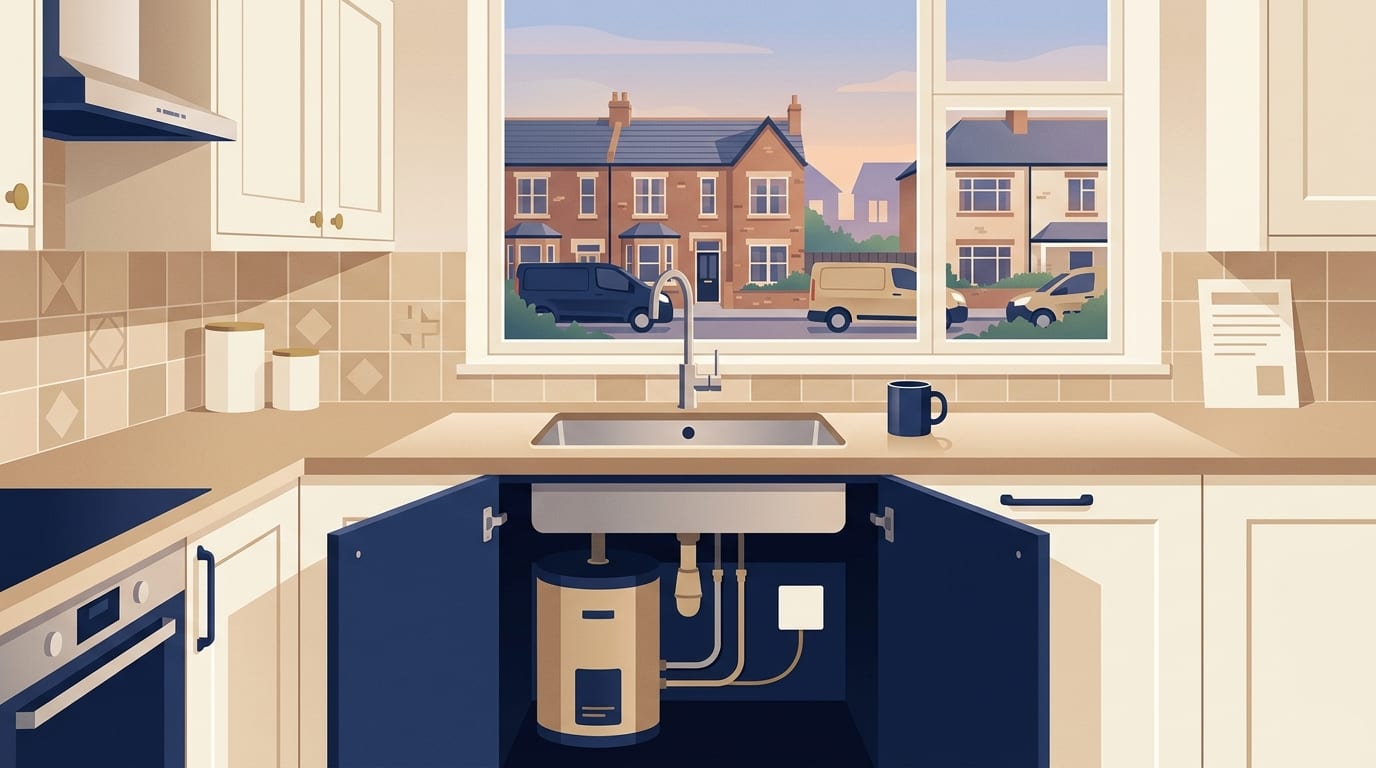
You can often find out what your pipes are made of by looking at the point where the water supply enters your property. You need to find the internal stop tap, which is typically located in a kitchen cupboard or a downstairs toilet. If you are not sure where yours is or what it looks like, you can read the guide to stopcock replacement cost and how to find yours.
Once you find the stop tap, look closely at the unpainted pipe connected to it. When inspecting this pipe, look for these visual signs:
- The unpainted metal looks dull grey and feels soft.
- There is often a swollen joint right beside the tap itself.
- Gently scraping the surface with a coin reveals shiny, silver metal underneath.
You must never cut into the pipe, scrape it deeply or attempt to remove any sections yourself. When carrying out this visual check, you should wear disposable gloves and avoid breathing in any dust from the pipe surface.
If the pipe is made from a different material, you will see different colours when you look at it. Copper is bright or dull brown, iron is dark and rusty, and modern plastic water pipes are usually blue.
Understanding who replaces which section of pipe
The responsibility for your water pipes is split at the boundary of your property. The water company is responsible for the communication pipe, which runs from the public water main to the stop valve outside your property. They are legally required to replace this section if it is lead and at risk of raising lead levels in your water.
As the property owner, you are responsible for the supply pipe that runs from the outside stop valve into your home. You are also responsible for all the internal plumbing all the way up to your kitchen tap. This means you must cover the cost of replacing the pipes on your own land.
Many water suppliers have rolling programmes to replace lead pipes on their own networks. According to WaterSafe, if you are replacing pipes within your property boundary, you should contact your local water company. They may be able to replace the pipes beyond your house and garden at the same time.
A general summary of the rules says that once you give written notice and a test finds lead at your tap above the legal limit, the water company replaces its section up to the outside stop valve at no charge. This is only a summary, so confirm the exact rules and testing process with your own water company.
What lead pipe replacement typically costs
Replacing the underground supply pipe involves laying a new pipe from the boundary to your internal stop tap. Contractors usually do this by digging a traditional trench or by using a trenchless method called moling. A traditional trench requires digging up paths or driveways, while moling uses equipment to punch a path underground with far less surface disruption.
A typical lead pipe replacement costs between £800 and £2,500 on average for a domestic property. The final price rises with longer pipe runs, difficult ground conditions and the method the contractor uses.
This table shows how the lead pipe replacement cost breaks down for different methods and job sizes.
|
Job description |
Typical cost |
|---|---|
|
Installed supply pipe per metre (traditional trench) |
£100 to £125 |
|
Installed supply pipe per metre (trenchless moling) |
£150 to £200 |
|
5 m run stopcock to house (private plumber) |
£400 to £800 (average £600) |
|
5 m run stopcock to house (WIAPS approved contractor) |
£500 to £1,000 (average £750) |
|
Full 20 m replacement |
£2,000 to £4,000 (average £3,000) |
These figures are typical 2026 prices. Your local quotes will differ depending on the length of the run, the ground and how easily the plumbers can reach the pipe.
What to do while you wait for replacement
If you suspect you have lead pipes, you should ask your water company to test your kitchen tap water. If their tests find lead in your supply, they should give you written advice on what steps to take next. Having this official record is useful when you notify them about upgrading your side of the system.
While you wait for your pipes to be replaced, you can take a simple short term measure to protect your household. For drinking and cooking, run the tap to clear water that has stood overnight in the pipes. Running a washing up bowl full of water is usually enough, but homes with longer service pipes may need to run the tap for longer.
This daily flushing is only a temporary solution, and lead pipes should be replaced as soon as possible.
If you have any plumbing work done on lead pipes, the disturbance can temporarily raise lead levels in your water. You must flush the tap for at least 10 minutes after any work is finished to clear the system completely.
Choosing an approved plumber for the work
There is no legal licence required for general water plumbing in the UK. This is why official qualifications and approved contractor schemes matter so much when you are hiring someone to work on your drinking water supply. Anyone you hire should be properly trained to prevent contamination.
You should replace lead pipes with new copper or plastic pipes that are approved for drinking water. This work should be done by a qualified plumber, such as one accredited through the WaterSafe register. WaterSafe is the national register of approved plumbers, and its members are thoroughly trained in the Water Fittings Regulations.
You can also look for plumbers who belong to approved contractor schemes run by APHC, CIPHE, SNIPEF or WIAPS. Using a qualified professional helps ensure your new supply pipe meets the legal standards. If low water pressure at home is also a problem, that guide explains the usual causes.
Once the job is planned, you must notify your water company when replacing lead pipework. WaterSafe notes that the water company may be able to replace the pipes beyond your house and garden at the same time.
Your consumer rights when hiring a plumber
When you hire a plumber to replace your supply pipe, you are protected by the Consumer Rights Act 2015. This law states that any service must be carried out with reasonable care and skill. If the standard of the groundwork or plumbing is poor, you can ask the contractor to put it right at no extra cost.
Make sure you get a proper written quote before any work begins, rather than an estimate. A fixed quote should clearly list:
- The total cost including VAT.
- All parts and approved plumbing materials.
- The labour for digging, moling and pipe fitting.
- The cost of making good any dug up ground.
Services arranged by phone, online or at your home usually carry a 14-day cooling-off period. This gives you the right to cancel the contract without penalty if you change your mind. However, this cooling-off period does not automatically apply to urgent repairs that you have specifically asked the plumber to carry out immediately. If you run into disputes, you can contact Citizens Advice for official guidance.
Buying an older property with lead plumbing
If you are buying a home built before 1970, it is very important to check the plumbing before you exchange contracts. You should ask your surveyor to check the outside and internal pipes during their inspection. You should specifically mention lead so they know to look for it closely.
If the survey reveals lead supply pipes, you can use the estimated replacement costs to negotiate the purchase price with the seller. The moment you complete the purchase, you take on full responsibility for the supply pipe on your land and all internal plumbing.
It is often much easier and cheaper to replace internal lead pipes before you move your furniture in and decorate. If the house requires extensive modernisation, you can read the guide on replumbing a house and what it costs to see how the water supply fits into the wider project.
Common questions
Is flushing the tap a permanent fix?
No. Running the tap to clear water that has stood overnight is a short term measure, and lead pipes should be replaced as soon as possible.
Can I replace just the internal pipes?
You can replace just the internal pipes, but this will not completely solve the problem if your underground supply pipe is also made of lead. The safest approach is to replace all lead pipework from the outside stop valve all the way to your kitchen tap.
Will my water company pay for my side of the pipes?
No, the water company will not pay to replace the pipes on your property. You are responsible for the cost of replacing the supply pipe within your boundary and the internal plumbing, while the water company is responsible for its own communication pipe.
How long does lead pipe replacement take?
A typical supply pipe replacement takes between one and three days to complete. The exact timeframe depends on the length of the pipe run, the layout of your property, and whether the plumber uses a traditional trench or trenchless moling.
Next steps to take
If you live in a home built before 1970 and want to sort out your water supply, follow these practical steps:
- Find your internal stop tap and do a visual check for dull grey, soft metal.
- Ask your water company to test your kitchen tap water if you suspect lead.
- Run the tap to clear standing water before drinking while you wait for a permanent fix.
- Give your water company written notice if lead levels are high so they can replace their section.
- Get fixed quotes from WaterSafe approved plumbers to replace your supply pipe and internal lead plumbing.
Upgrading old lead pipes protects your household and ensures your drinking water meets modern standards. When you are ready to get quotes for the job, you can find a plumber near you through the directory.
Find a top rated plumber near you
4,869 plumbers across the UK, each ranked on their Google rating and the number of reviews behind it. Start with your county: