A boiling water tap is a kitchen tap connected to a small, electrically heated tank that sits inside the cupboard under your sink. In 2026, a boiling water tap typically costs from a few hundred pounds to well over a thousand, plus the cost of fitting it. Consumer testing shows that while the running cost of the tank is low, the upfront purchase price means the payback period against a standard kettle is extremely long.
Estimates vary heavily depending on the type of tap you choose and who manufactures it. Price lists and consumer testing give two different sets of figures. This is because the cheapest basic models cost far less than the premium systems made by the best-known tank brands. A typical price list for a tap and the labour to fit it shows a headline average of £400, but this covers a wide range of setups.
The cheapest option is a single boiling tap. This sits completely separate from your existing hot and cold kitchen tap and requires a new hole to be cut into your sink or worktop. A 3 in 1 tap replaces your main kitchen tap entirely, dispensing standard hot water, standard cold water and instant boiling water from a single spout. A 4 in 1 tap does the same but adds a fourth function, usually filtered cold water.
The table below shows typical 2026 prices for the tap and the fitting combined, broken down by the type of tap you choose.
|
Tap type |
Typical price including fitting |
|---|---|
|
Single boiling tap |
£250 to £300 |
|
Single boiling tap with filter |
£350 to £400 |
|
3 in 1 tap (with or without filter) |
£400 to £1,000 |
|
4 in 1 tap (with or without filter) |
£500 to £1,200 |
These figures are typical 2026 prices, and local quotes will differ based on your kitchen and the tradesperson you hire.
Consumer testing figures for the tap alone show just how much the manufacturer impacts the price you pay. The cheapest model from the best-known tank brand costs £1,050 upfront, before you pay a plumber to install it. If you choose a premium system over a basic model, your total bill will sit well above the average price list figures.
What the tap and the tank under the sink involve
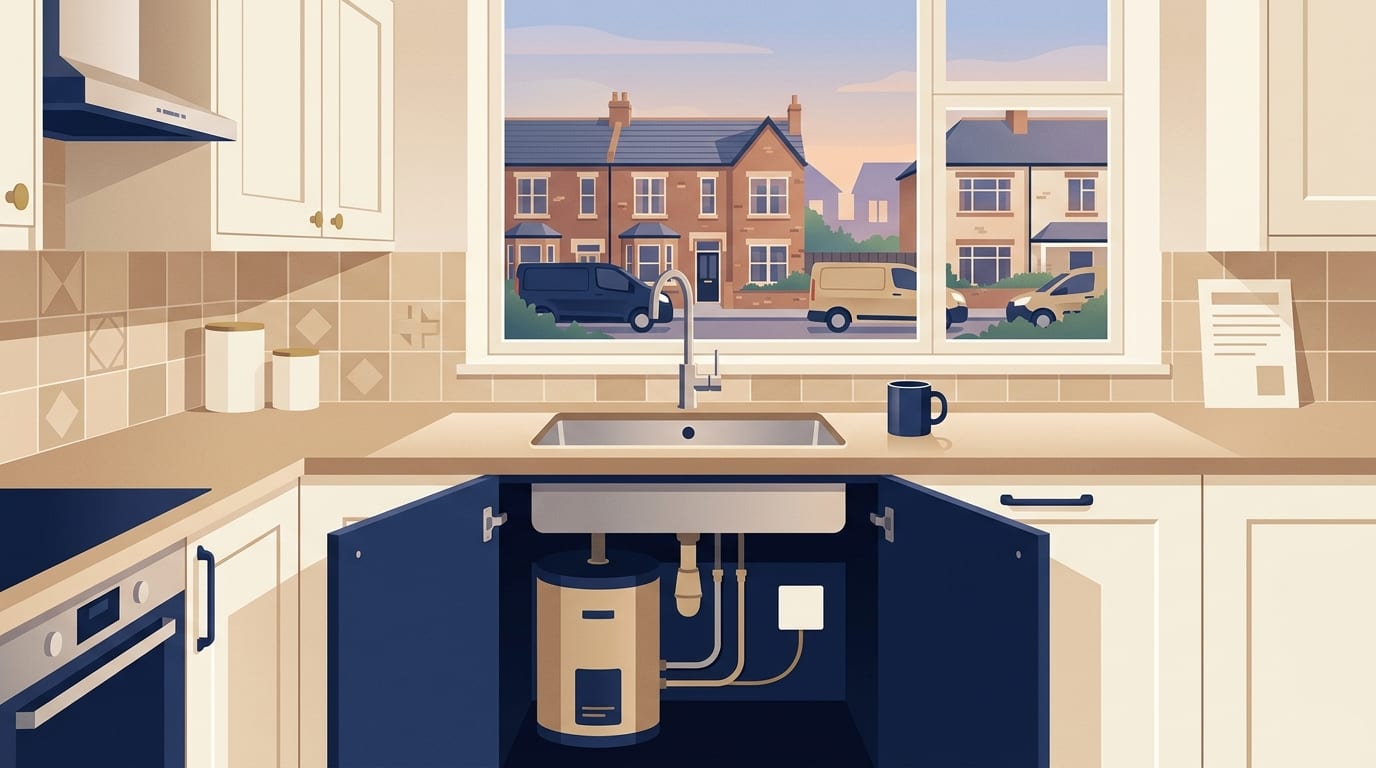
When you buy an instant boiling water system, the tap on the worktop is only half of the plumbing job. The heavy lifting is done by the boiler tank, which is heavily insulated and holds water at or near boiling point so that it is ready the moment you push the tap handle.
This tank sits in the cupboard under the sink. It connects to both the mains electricity to power the heating element and the water supply to fill the tank. Because of this, you will lose a noticeable amount of your under-sink storage space. Larger tanks hold more boiling water, which is highly practical for busy family households, but larger tanks need more cupboard space to sit safely.
You must measure the height, width and depth of the space beneath your sink before you order anything. You need to account for the physical footprint of the tank, the pipework connecting it to your water supply, the power cable and any filter.
If you are planning to upgrade your whole sink area at the same time, you can read our guide on kitchen sink replacement cost and what is involved to understand how the tap fits into the wider plumbing project.
Fitting cost and how long it takes
Installing a boiling water tap typically takes a plumber one to two hours, provided the pipework and electrics are already in place. The plumber will turn off your water supply at the stop tap, remove your old tap if you are fitting a 3 in 1 model, cut into your cold water feed to supply the new tank, and then connect the hoses before testing the system for leaks.
Most tradespeople charge an hourly rate for small jobs, and many have a minimum job charge of about £40 to £50. This minimum charge ensures their travel time and vehicle costs are covered even if the installation is entirely straightforward and finished quickly. Plumbers working in London and big cities typically cost more than those operating in other parts of the UK.
Some manufacturers offer their own installation service for an additional fee, rather than expecting you to hire a local plumber or do it yourself. One maker usually charges £99 per system for fitting. Another charges £180 on top of the tap price, while a third charges £260 if chosen at the point of purchase. Other makers offer no installation service at all, leaving you to organise the fitting.
The installation must comply with the Water Supply (Water Fittings) Regulations 1999. The property owner and anyone doing the plumbing work have a legal duty to ensure these rules are met, which prevents contaminated water from flowing back into the public mains. The Drinking Water Inspectorate recommends choosing a plumber who is a member of the WaterSafe scheme. Approved businesses hold public and employers' liability insurance, and there is an independent complaints procedure if the work goes wrong. You can read the official guidance on the Drinking Water Inspectorate website.
Do you need an electrician
The boiler tank beneath your sink needs a dedicated power supply to heat the water. The tank needs a 13-amp power supply. This is typically achieved by plugging the tank into a dedicated socket located inside the cupboard under the sink.
If you already have a suitable electrical socket inside that cupboard, a plumber can usually complete the entire installation. However, if there is no socket available, you cannot simply trail an extension lead from the worktop down into the cupboard. Water and electricity are a dangerous combination, and the socket must be professionally installed in a safe, dry position away from the immediate risk of leaking pipes.
If a new socket or an electrical upgrade is needed, that is work for a registered electrician. New electrical work is not plumbing work. Bringing in an electrician will add cost to your project and require you to coordinate two different trades. The electrician must fit and test the new socket before the plumber arrives to install the water tank.
Running costs against a kettle
Homeowners often worry that keeping a tank of water hot all day and night will cause their electricity bill to spike. In reality, the tanks are heavily insulated to trap the heat inside, and the daily running cost is low. When the tank is simply holding the water at temperature and not actively heating a fresh intake of cold water, the standby use costs around 3p per day.
Consumer testing based on the October 2026 electricity price cap of 26.11p/kWh shows exactly how the running costs compare. A boiling tap costs about £11.04 a year to run. By comparison, the cheapest Best Buy kettle costs about £35.26 a year in electricity to boil. A separate price list gives a different estimate of about £11 a year with a boiling tap against about £45 a year for an average household using a kettle. Estimates vary, and the consumer testing figures exclude filters and maintenance.
While the boiling tap uses less electricity and costs less to run, the upfront purchase price is vastly different. The cheapest Best Buy kettle costs just £10.99 upfront. The cheapest boiling tap from the leading brand costs £1,050. Because of this massive difference in the initial price, the consumer testing states that recouping the investment could take more than 25 years.
A boiling tap is unlikely to save money overall. The true value lies in the convenience. You never have to stand and wait for a kettle to boil, and you only ever heat the exact amount of water you need for your cup or saucepan.
Filters and servicing
Boiling water taps are not fit-and-forget appliances. They require regular maintenance to keep the water tasting fresh and to protect the expensive heating element inside the tank. Many systems use a replaceable filter cartridge on the cold water supply.
This filter removes impurities from the water and helps to prevent limescale from building up inside the boiler. Filters need replacing every three to twelve months, depending on the make.
A replacement filter costs about £45. You must factor this ongoing cost into your annual household budget. Follow the maker's schedule for filter changes, and ask what the warranty requires.
The system will also need occasional descaling, similar to how you descale a standard kettle. The process varies by manufacturer, but it usually involves flushing a dedicated descaling solution through the tank. You should always follow the manufacturer's exact instructions for descaling to keep the appliance safe.
Is a boiling water tap worth it
Deciding whether a boiling water tap is worth the money comes down to how much you value speed, convenience and the physical layout of your kitchen. If you regularly cook pasta, blanch vegetables, sterilise baby bottles or make multiple hot drinks throughout the day, having instant boiling water saves waiting for a kettle. It also removes the kettle from your worktop, which frees up preparation space and creates a cleaner, modern look.
However, the financial case is entirely different. You are unlikely to recoup the cost. The upfront cost of buying the tap and tank, paying a plumber to fit it, and buying replacement filters every few months heavily outweighs the small annual saving on your electricity bill.
You also need to weigh the loss of storage space. The tank, the pipework and the filter will take up a significant portion of the cupboard under your sink. If you live in a small flat where kitchen storage is already tight, losing that cupboard space to a large metal tank might be more frustrating than waiting for a standard kettle to boil.
What to ask the plumber before you buy
Before you commit to buying a specific tap or hire a plumber to fit it, you need to ask a few clear questions. Getting the details right early on prevents unexpected labour costs and ensures the system you buy will actually fit your kitchen.
- Which tank size is appropriate for my household, and will it physically fit into my cupboard space?
- Where will the power come from, and do I need to hire an electrician to fit a socket first?
- What are the ongoing filter replacement and descaling costs for this specific model?
- How long is the manufacturer warranty on the tank, and what maintenance records must I keep to keep it valid?
- What exactly does your written quote include, and does it cover the tap, the tank, the pipe fittings and the labour?
- Are you a member of a WaterSafe approved plumber scheme?
If you are hiring a plumber for this and other small household jobs, you can check our guide on how much a plumber charges per hour or per day to see how the trade typically prices its time.
Common questions
What is an instant boiling water tap?
An instant boiling water tap is a kitchen tap that dispenses water at or near boiling point directly from the spout. It achieves this by storing water in a small, electrically heated and heavily insulated tank hidden inside the cupboard under the kitchen sink. This allows you to draw boiling water instantly without waiting for a traditional kettle.
How much does a tap from the best-known brand cost?
Consumer testing shows that the cheapest model from the best-known tank brand costs £1,050 upfront. This price covers the tap and the tank alone. You will still need to pay for installation, either by hiring a local plumber or by paying the manufacturer's own installation fee if they offer one.
Do boiling water taps need a hot water supply?
The boiling water function does not need a hot water supply. The tank under the sink takes a compatible cold water feed from your mains pipe and heats it electrically. If you are fitting a 3 in 1 or 4 in 1 tap that replaces your main kitchen tap entirely, the standard hot water side of the tap will still need to connect to your home's regular hot water supply from your boiler or cylinder.
Are boiling water taps safe for a family kitchen?
Safety features differ between models, so ask the supplier what the tap has, such as a child safety handle, and follow the maker's instructions for use. Hot water at or near boiling point can scald, so take care around children.
Next steps before you order
If you are ready to add a boiling water tap to your kitchen, taking a few practical steps will help you avoid buying a system you cannot fit or afford to run.
- Clear out the cupboard under your kitchen sink and measure the exact height, width and depth available.
- Look inside the cupboard to see if you already have a safe 13-amp electrical socket installed.
- Check the price of replacement filters for the specific models you are considering, as this will be an annual cost.
- Decide whether you want a standalone single boiling tap or a 3 in 1 tap that replaces your main kitchen tap entirely.
- Gather three fixed-price quotes from local tradespeople to compare the labour costs for fitting.
Taking the time to match the tap to your existing plumbing and electrics will make the installation straightforward and safe. When you know what type of tap you want and whether you need an electrician to fit a socket first, you can find a plumber near you to get a written quote for the work.
Find a top rated plumber near you
4,869 plumbers across the UK, each ranked on their Google rating and the number of reviews behind it. Start with your county: