The stopcock, or inside stop tap, is the valve that shuts off the mains water supply to your house. It is usually found under the kitchen sink or exactly where the water pipe enters your home. A straight replacement typically costs around £100 to £300 in 2026, though you will pay more if access is poor. If you have a seized valve, you need a plumber rather than force, as pushing it too hard can snap the parts inside.
What an internal stopcock does
The stopcock is the main control valve for the mains water entering your property. It allows you to isolate the water supply completely. This is the valve you must turn off if you have a major leak or if a plumber needs to work on your pipes. It sits directly on the supply pipe, which is the pipe that brings fresh water from the street network into your home.
When this valve is open, water flows freely to your taps, toilets and heating system at constant mains pressure. When you close it, the flow stops immediately at that point, acting as a secure barrier. However, the pipes inside your house will still be full of stationary water. If a plumber is changing the valve or working on the system, they will need to empty those pipes first.
Draining down the system takes about 10 to 20 minutes depending on the size of your home. Once the new valve is fitted and the water is turned back on, the job is not quite finished. After refilling, you must allow at least 20 to 30 minutes of observation for leaks. This ensures the new joints are completely watertight under normal mains pressure before the plumber packs up and leaves.
Where to find your internal stop tap
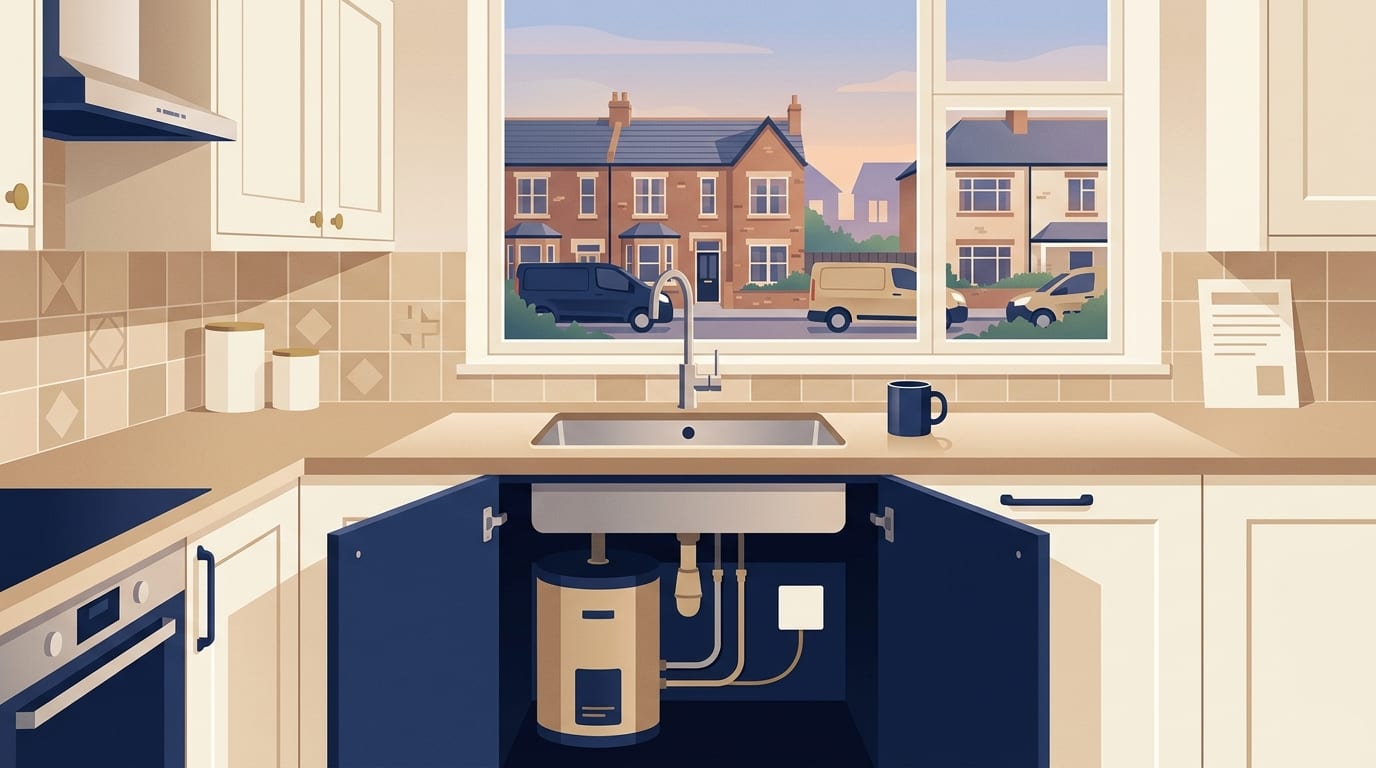
Finding your stopcock before an emergency happens will save you time and panic. The valve is usually found on the ground floor, close to where the main water pipe enters the building. WaterSafe advises that the internal stop tap is usually located under the kitchen sink.
If it is not under the kitchen sink, you will need to look in other common locations around the ground floor. Check inside any low kitchen cupboards, especially those positioned against the outside walls. It might also be located in a downstairs bathroom or a downstairs toilet, often tucked behind the toilet pan or under a small basin.
In some homes, the incoming pipe arrives in a different room entirely. You might find the brass valve exposed in a garage or a utility room. If your property has a cellar, the mains pipe often enters there before coming up through the floorboards to the rest of the house. Another common hiding place is a small cupboard under the stairs. Learn exactly where it is and make sure boxes or cleaning supplies are not blocking your access to it.
How to test your stopcock safely
You should check that your stopcock works regularly so you know it will function when a pipe bursts or a tap fails. The valve usually has a brass handle shaped like a small wheel or a T-bar, though some modern ones have a plastic lever. You operate it by turning the handle by hand.
To close the valve and shut off the water, you turn it clockwise. To reopen the supply, you turn it anti-clockwise. You must operate it slowly and never force it. Pushing or pulling too hard on a stiff handle can easily break the internal parts. If your internal stopcock is not turning or shutting off, you will need to contact a plumber to help to fix this.
When you close the valve to test it, turn on your kitchen cold tap to check the water has stopped. The kitchen cold tap is usually fed directly from the mains, making it the most accurate place to test. Be aware that water may keep flowing for a few minutes after you close the stopcock. This is just the remaining water draining out of the internal pipes, rather than a sign that the valve has failed. Once the flow stops completely, turn the stopcock anti-clockwise to restore your supply.
What a stopcock replacement costs
If your valve is leaking, seized or failing to shut off the water, a plumber can either repair the internal parts or replace the whole unit. The price depends heavily on how easy it is to reach the pipe and whether the valve just needs a service or a complete swap. The table below shows typical prices for different stopcock repairs and replacements.
|
Job description |
Typical time |
Typical cost |
|---|---|---|
|
Tighten gland and minor adjustment |
30 to 60 minutes |
£60 to £100 |
|
Repack gland |
1 hour |
£80 to £140 |
|
Replace washer and service stopcock |
1 to 2 hours |
£100 to £180 |
|
Replace stopcock with good access |
1 to 3 hours |
£150 to £300 |
|
Replace stopcock with poor access or pipe alterations |
3 to 5 hours |
£300 to £650 |
These figures are typical 2026 prices, and your local quotes will differ.
Tradespeople answering a consumer question in March 2026 gave mostly £75 to £150 for a standard domestic stopcock swap. Examples included £80 to £120, £85 to £125, and £75 to £100 including materials. One answer gave £100 to £250 as a typical range, up to £300 to £400+ if trickier or urgent.
What pushes the price up
Several factors can move your quote to the higher end of those price ranges. The biggest physical factor is access to the pipework. If your stopcock is boxed in, hidden behind fixed kitchen units or buried under solid floorboards, the plumber will take much longer to reach it and replace it.
Pipe alterations also push up the cost. If the new valve does not match the existing pipework, the plumber may need to alter the pipe, which takes extra time and materials. The condition of the street main is another major factor. To change your internal valve, the plumber must first shut off the water outside your property. If the outside valve is broken or cannot be isolated, the job becomes much more complicated.
When you need help outside normal working hours, you will pay a premium for the convenience. Emergency callouts in evenings or weekends can add £80 to £150 to the final bill. Location plays a part too, as plumbers in London and the South East tend to be more expensive than in other parts of the country. You can learn more about how tradespeople set these rates in the guide to plumber call-out charges.
The outside stop tap and who owns it
Your home is also served by an external stop tap, usually located under a small metal or plastic cover in the pavement or at the boundary of your property. This valve marks the divide between what belongs to the water company and what belongs to you.
The communication pipes running from the main street network to the property boundary are the water company's responsibility. Their responsibility usually ends at this company stop tap. The supply pipes running from the property boundary to the first internal water fitting or stop tap belong to the property owner. This means the property owner is responsible for any stop taps and fittings along that supply pipe on their land.
WaterSafe warns that you may need to seek permission to operate the external stop tap even in an emergency. Some suppliers do not allow residents to operate it at all, and you could be liable for repairs if you cause damage.
Thames Water advises using the outside stop valve only in an emergency. You should not rely on your outside stop valve to turn the water off inside your home for routine plumbing work. If your property is on a shared supply, shutting off the outside valve also shuts off your neighbour's water, so you must tell them first. Just like the inside valve, you must never force it further when it stops turning.
When to call a plumber
A seized or leaking stopcock is not a problem you should ignore, and it is certainly not something you should try to force open or closed. Don't force a seized valve, as this often snaps the spindle inside and leaves you with no way to control the water.
You should call a professional plumber if you face any of the following situations:
- You cannot find or operate a working external stop tap to isolate the supply.
- There is severe corrosion on the internal valve or on the nearby pipework.
- The lead pipework looks thin, brittle or deformed.
- Soldered joints around the valve are actively leaking.
- The property has a shared water supply such as some flats or converted properties.
Lead pipework requires particular care because the metal is soft and easily crushed. Lead pipework is a job for a plumber, and a valve should not be fitted onto thin or deformed lead. If the external stop tap will not shut at all, you must contact your water supplier rather than a private plumber. If both the inside and outside valves fail, you should contact a plumber immediately, as you have no way to stop water entering the house. If you are dealing with a sudden leak and cannot stop the flow, you can read the advice on when to call an emergency plumber to limit the damage safely.
What to ask in the quote
When you contact a plumber to fix or replace your stopcock, you need to know exactly what you are paying for. A clear agreement prevents surprises on the final bill and stops a simple hourly job from dragging on.
Ask the plumber for a quote rather than an estimate. A quote is a fixed price for the specific job of repairing or replacing the valve. An estimate is only a rough guess and can increase if the work takes longer than expected. Large cash payments up front with no paperwork are a warning sign, so insist on a written quote.
Make sure your quote includes the following details:
- Whether the price covers just the labour or includes all parts and materials.
- Whether VAT is included in the final figure.
- Confirmation that the price covers the 10 to 20 minutes needed for draining down.
- Confirmation that the plumber will stay for the 20 to 30 minutes of observation after refilling.
- Any extra charges for altering the pipework if the new valve is a different size.
Under the Consumer Rights Act 2015, any service you pay for must be carried out with reasonable care and skill. If the new valve leaks or is fitted poorly, you have the right to ask for the work to be put right at no extra cost. Services arranged by phone or at home usually carry a 14-day cooling-off period. However, this does not automatically apply to urgent repairs you have specifically asked the plumber to carry out immediately.
Common questions
Why is my stopcock so hard to turn?
Stopcocks often become stiff because they are left in the open position for years without being tested. Limescale and debris can build up on the internal threads, or the brass components can corrode slightly. You should never force a stiff handle, as this often snaps the spindle and breaks the valve completely.
What happens if I break the internal stop tap?
If you snap the spindle while the valve is open, you will not be able to shut off your water in an emergency. If you break it while it is closed, you will have no running water in the house. In either case, you will need a plumber to replace the unit, and they will have to shut off the supply at the street to do the work.
Who pays for a leak on a shared water supply?
Shared supply pipes are the joint responsibility of all the property owners served by that pipe. If a leak happens on the shared section of the pipe before it splits off to your individual home, the connected owners are jointly responsible for putting it right.
Does home insurance cover a broken stopcock?
Insurance policies vary, so check your policy wording or ask your insurer, because cover for a seized or corroded valve is not the same for every policy. If a failed valve leads to a burst or leak, the guide on burst pipe repair cost explains what that repair involves.
Next steps for replacing your stopcock
If you need to get your stopcock repaired or replaced, take these steps to get the job done smoothly:
- Search your ground floor to find the exact location of the internal valve.
- Test the valve gently by turning it clockwise, but stop immediately if it feels seized.
- Locate your external stop tap at the boundary so the plumber knows where to turn off the mains.
- Check if your home is on a shared supply, as you will need to warn your neighbours before the water goes off.
- Ask tradespeople for a fixed written quote that includes parts, VAT and the time needed to test for leaks.
A working stopcock is your main defence against water damage, so it is always worth getting a stiff or leaking valve sorted out before a real emergency strikes. If you are ready to get quotes for a replacement, you can find a plumber near you to inspect your pipework and give you a fixed price.
Find a top rated plumber near you
4,869 plumbers across the UK, each ranked on their Google rating and the number of reviews behind it. Start with your county: