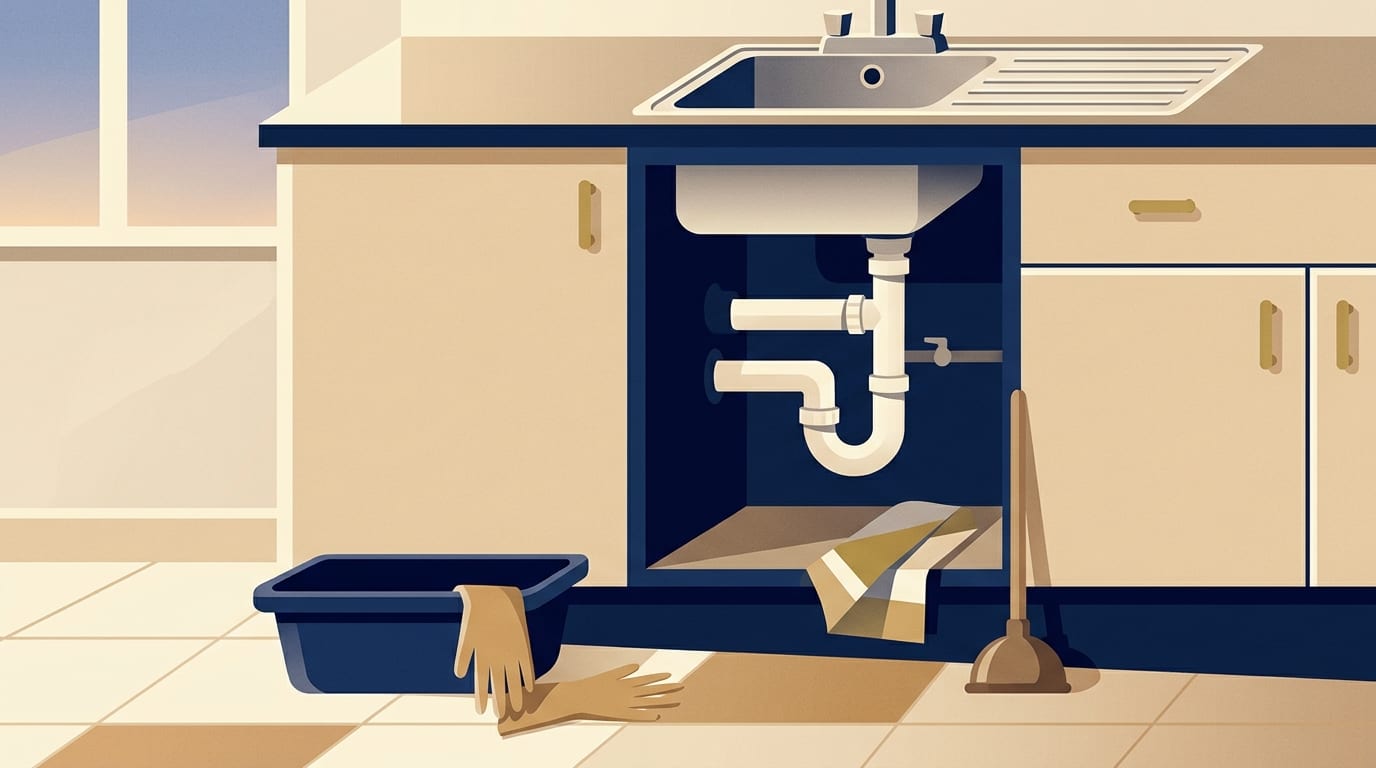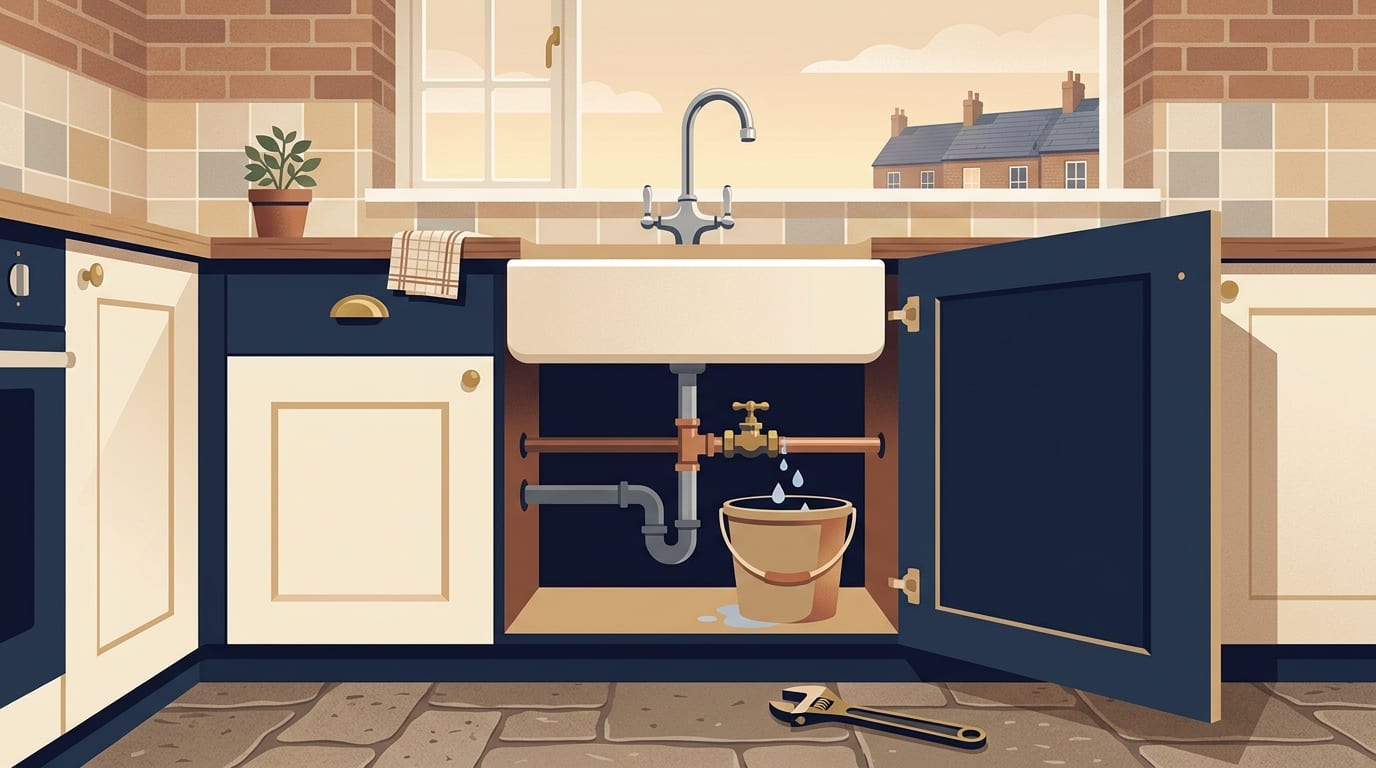
An emergency plumber is necessary when you have a burst pipe, an uncontrollable leak, water nearing electrics, or no heating during cold weather for a vulnerable person. The first thing you must do is turn off your internal stop tap by twisting it clockwise. This stops the water supply and limits the damage while you wait for help to arrive. Out-of-hours emergency call-out charges typically range from £40 to £150 in 2026, with hourly labour charged on top.
What counts as a plumbing emergency?
You need to know whether your situation requires immediate out of hours help or if it can wait until morning. A plumbing emergency is any situation that threatens to cause immediate damage to your property, poses a severe health and safety risk, or leaves vulnerable people without essential heating or water.
A burst pipe is the clearest example of a plumbing emergency. Mains water enters your home under high pressure. If a pipe splits, that water will rapidly soak through ceilings, floorboards and walls. You must act quickly to stop the flow before it compromises the structure of your home.
Water leaking near electrical fittings is a severe hazard. If water is dripping through a ceiling light fitting or running down a wall near plug sockets, you need professional help immediately. Mixing water and electricity creates a serious risk of fire and electric shock.
During the summer, a broken boiler is an inconvenience that can usually wait for a scheduled appointment. During freezing winter weather, a broken boiler in a home with elderly residents or young babies becomes a genuine emergency that requires urgent attention.
Sewage backing up into your sinks, baths or garden is another clear emergency. This poses a significant health risk to your family and requires specialist equipment to clear the blockage safely.
First steps to limit the damage
When water is pouring into your home, you need to take immediate action to protect your property. Do not wait for a professional to arrive before you start limiting the damage. Follow these official steps on what to do if a pipe bursts to secure your home.
- Turn off the water at the internal stop tap immediately by turning the valve clockwise.
- Switch off your central heating system or boiler to prevent it from running without water.
- Open all your hot and cold taps to drain the system and get the remaining water out of the pipes quickly.
- Switch off the electricity at the mains if water has reached any electrical fittings, but only do this if it is completely safe to reach the fuse box.
- Soak up and contain the escaped water using thick towels, buckets and mops to protect your floors and ceilings.
- Contact a qualified local plumber to arrange an urgent repair.
If a pipe has frozen but has not burst, turn off the stop tap and open the nearest tap so the water can escape as the ice melts. Then thaw the pipe slowly with a hot water bottle or a warm cloth wrapped around it. Never use boiling water, a naked flame or a blowtorch, because fierce direct heat can damage the pipe and a flame can start a fire.
How to find and turn off your stop tap
Your internal stop tap, sometimes called a stopcock, is the most important valve in your house. It controls the cold water mains supply entering your property. Turning it off stops all new water from coming inside, which is your best defence against flooding.
You will usually find the internal stop tap under the kitchen sink. If it is not there, check inside a downstairs kitchen cupboard, in a utility room, in a cellar, or in an attached garage. It often looks like a brass T-bar or a small metal wheel sitting on a copper pipe.
To close the stop tap, you must turn it clockwise. You might find it stiff to turn if it has not been used for several years. Grip it firmly and turn it as far as it will go to the right.
Once the stop tap is closed, the cold tap at the kitchen sink should soon run dry, which confirms that the mains supply is off. Taps fed from a storage tank in the loft will keep running until the tank has emptied.
If you smell gas
A smell of gas is a severe safety risk and is not a job for a standard emergency plumber. If you suspect a gas leak, call the free gas emergency line on 0800 111 999 straight away. In Northern Ireland the number is 0800 002 001.
While you wait for the emergency engineers, you must open all your doors and windows to ventilate the property. If you know where your gas meter control valve is and it is easy to reach, shut off the gas supply there. Do not go into a cellar or basement that smells of gas to do this. Do not turn any electrical switches on or off, and do not smoke or strike matches.
By law, only Gas Safe registered engineers may work on gas appliances. A general plumber without this registration is acting illegally if they attempt to repair a gas boiler or a gas pipe. Never attempt gas work yourself.
You should also be aware of carbon monoxide. This is a poisonous gas produced by faulty appliances that you cannot see or smell. The Health and Safety Executive's domestic gas safety guidance says the symptoms of carbon monoxide poisoning include headaches, dizziness, breathlessness, nausea, tiredness and chest pain. If you notice these symptoms and suspect carbon monoxide, switch off the appliance, open doors and windows, get into fresh air, call the gas emergency number and see your GP.
Is it your pipe or the water company's?
Before you pay for a private contractor, you need to check who is legally responsible for the leaking pipe. If the leak is on the water company's side of the boundary, the repair is their job and not yours.
The water company is responsible for the large water main in the street. They are also responsible for the communication pipe that connects the main up to your property boundary. The external stop tap, which is usually located under a small metal cover in the public footpath, belongs to the water company, as does the water meter.
As the homeowner, you are responsible for all the pipes on your private property from the boundary onwards. This includes the supply pipe running under your front garden or driveway, and all the internal plumbing inside your building.
If you share a supply pipe with your neighbours, the pipe is the joint responsibility of all the properties connected to it. If a shared pipe leaks on private land, you and your neighbours are jointly responsible for getting it repaired.
Problems that can wait for normal hours
Hiring a tradesperson in the middle of the night or on a bank holiday is expensive. If the problem is not causing damage or putting anyone in danger, you can save money by waiting for normal working hours.
A dripping tap can simply be caught in a bowl or a plugged sink until morning. A slow-draining sink or shower is frustrating but manageable if you stop using it temporarily. A toilet that will not flush can be flushed manually by pouring a bucket of water directly into the bowl.
If you have a single cold radiator while the rest of the house is warm, this is not an emergency. It usually means the radiator needs bleeding or that a single radiator valve is stuck. You can manage this by wearing warmer clothes in that specific room until you can book a standard appointment.
If you spot a damp patch on a ceiling but water is not actively dripping, you have time to investigate. You can read more about how to detect a water leak in your home to find the source before you call someone out for a costly evening visit.
How much does an emergency plumber cost?
Emergency work is always more expensive than a scheduled daytime visit. You are paying for the tradesperson to drop everything, travel quickly, and work unsociable hours.
Emergency call-out charges typically range from £40 to £150, though some firms charge up to £250 just to attend. Once they arrive, you will also pay for their labour if further work is needed. The emergency hourly rate sits around £80. Some plumbers calculate this differently, choosing to charge a standard rate plus a surcharge of 50 per cent or more, or billing at time and a half.
Standard hourly rates during normal working hours range from £25 to £110, with an average of £58. A burst pipe repair typically costs between £100 and £500 or more, depending on how difficult the pipe is to reach and how much damage has been done.
The table below shows typical costs for different types of plumbing services.
|
Type of plumbing service |
Typical 2026 price range |
|---|---|
|
Standard hourly rate |
£25 to £110 |
|
Emergency call-out fee |
£40 to £150, with some up to £250 |
|
Emergency hourly rate |
Around £80, or the standard rate plus 50 per cent or more |
|
Burst pipe repair total cost |
£100 to £500 or more |
These figures are typical published prices for the stated year, and your local quotes will differ. Prices in London and the South East are generally higher than in other parts of the UK. You can learn more about how these fees work in the guide to plumber call-out charges.
What to ask before they set off
When you are standing in water, it is tempting to hire the first person who answers the phone. Taking two minutes to ask the right questions will protect you from inflated bills and poor workmanship.
Be cautious of call handling firms that advertise heavily online. They often take your details and pass the job to a local contractor, adding a heavy markup to the final bill. You are usually better off calling a local tradesperson directly.
Ask these questions before you agree to a visit:
- What is your emergency call-out fee?
- Does that call-out fee include the first hour of labour, or is labour charged on top?
- What is your hourly rate once the first hour is over?
- Do you have a minimum charge for an emergency visit?
- Are parts and materials included in this rate, or will they be added to the bill?
- Do your prices include VAT?
- If the problem involves a boiler or another gas appliance, are you Gas Safe registered for that type of appliance?
A reputable professional will answer these questions clearly and give you a solid idea of their pricing structure over the phone.
Your rights on an emergency call-out
You have strong consumer protections under UK law when you hire a tradesperson, even in an emergency. However, the rules regarding cancellations are different for urgent call outs.
Usually, when you arrange a service at home or over the phone, you are entitled to a 14-day cooling-off period. This allows you to change your mind and cancel the contract without penalty. You do not automatically get a cooling-off period if you ask a business to come to your home for urgent repairs or maintenance, such as mending a burst pipe.
Once the work begins, the Consumer Rights Act 2015 applies. This law states that any service must be carried out with reasonable care and skill. If the tradesperson does a poor job or causes further damage through careless work, the service is unlikely to have met that standard.
If the work is not done with reasonable care and skill, you have the right to ask the trader to put it right at no extra cost to you. Furthermore, if you did not agree on a fixed price before the work started, the law states that the final price you are charged must be reasonable.
Common questions
What does a gas leak smell like?
Energy companies add a strong, distinctive chemical to the gas supply so you can detect a leak quickly. It smells heavily of sulphur or rotten eggs. If you notice this smell, you must ventilate the area and call the emergency gas number immediately.
Does a 24/7 plumber cost more at weekends?
Yes, almost all tradespeople charge a premium for working outside normal weekday hours. You will pay higher call-out fees and higher hourly rates during evenings, weekends and on bank holidays.
Can I refuse to pay if the emergency plumber does a bad job?
Under the Consumer Rights Act 2015, the work must be done with reasonable care and skill. If the repair fails immediately because of poor workmanship, you can ask the tradesperson to fix the problem at no extra cost rather than refusing to pay the initial bill outright.
Will an emergency plumbing repair be guaranteed?
Most reputable plumbers will guarantee their labour and the parts they supply for a set period. You must keep your invoice and any written paperwork as proof of the work in case the pipe leaks again in the future.
Next steps for your plumbing emergency
If you are dealing with a leak right now, you need to move quickly and methodically. Use this checklist to take control of the situation.
- Turn off your internal stop tap by twisting it clockwise.
- Switch off the central heating and open your taps to drain the system.
- Switch off the electricity at the mains if water is near any sockets or lights and the fuse box is safe to reach.
- Contain the spilled water with buckets and thick towels.
- Check the time to see if the repair can safely wait for normal working hours.
- Call a local professional and ask for their call-out fee, hourly rate and minimum charge.
Once the immediate danger is managed and the water is shut off, you have the breathing space to find the right person for the job. Take your time to compare local rates, check qualifications, and find a plumber near you who can resolve the problem safely and fairly.
Find a top rated plumber near you
4,869 plumbers across the UK, each ranked on their Google rating and the number of reviews behind it. Start with your county: