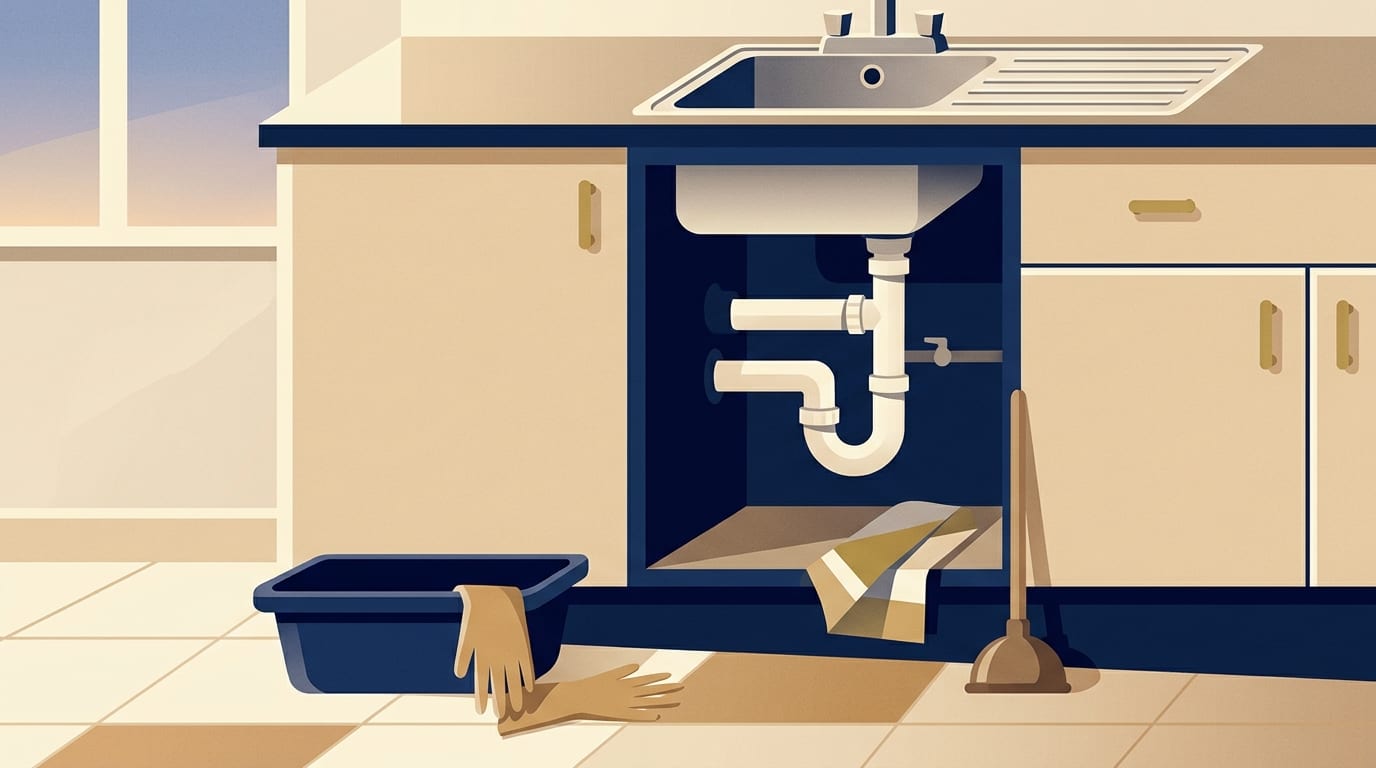
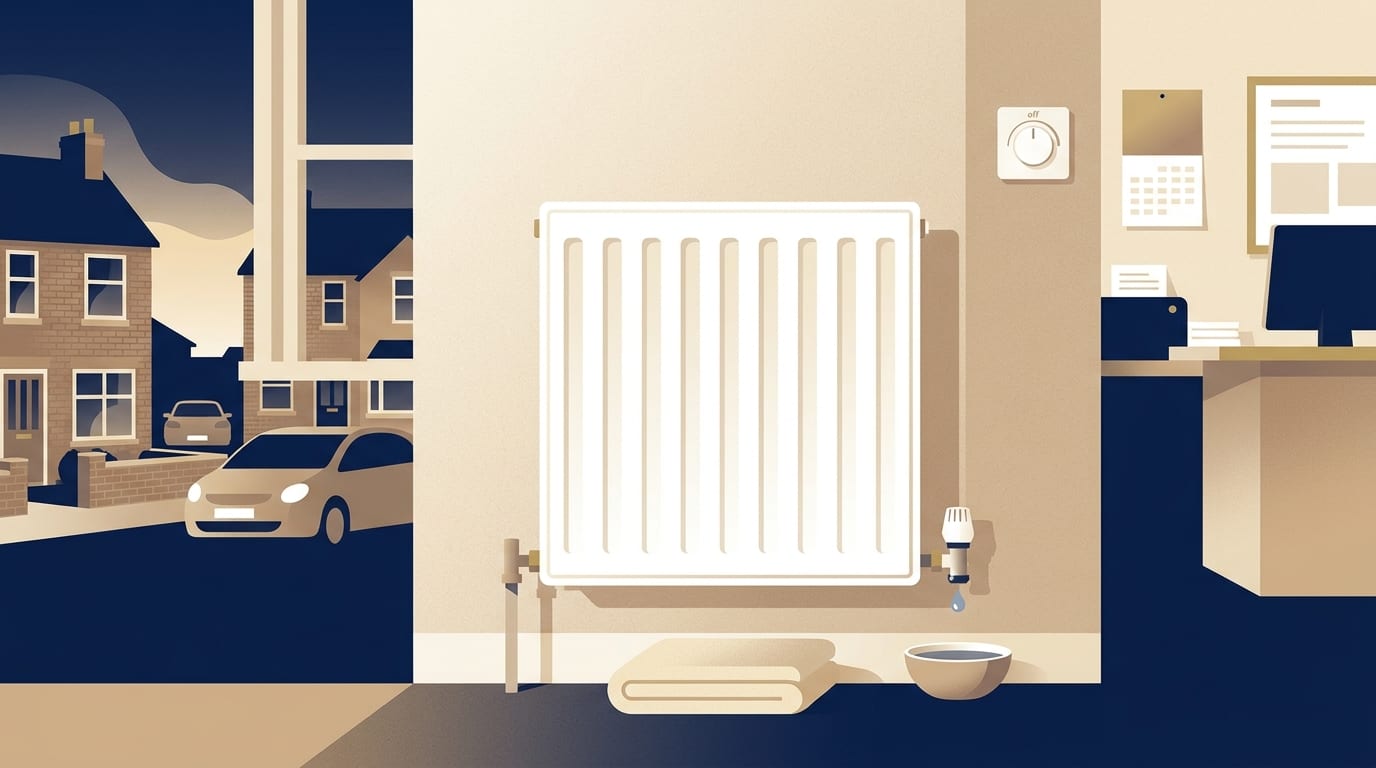
A boiler leaking water should not be left running, so turn your heating off and put a bucket or some towels under the drip. You will need to call a Gas Safe registered engineer, because a boiler has to be opened up to find most causes. Where the water appears usually points to the reason it is leaking.
Where is the water coming from?
Your boiler contains both water and gas components, and water travels through various internal pipes, valves and heat exchangers. When a leak appears, the location of the puddle or the drip gives a strong clue about which part has failed.
The following table shows where water usually appears and what that location suggests about the cause.
|
Where the water is |
Likely cause |
What to do |
|---|---|---|
|
Under the pipe fittings at the bottom |
Loose joints or damaged seals |
Catch the water and call an engineer |
|
From the plastic pipe outside |
Blocked or frozen condensate pipe |
Thaw it safely if you can reach it |
|
From the metal pipe outside |
High pressure or faulty relief valve |
Check your pressure gauge reading |
|
Dripping from the main casing |
Internal fault or faulty heat exchanger |
Turn the boiler off and call an engineer |
|
Weeping from older metal parts |
Corroded pipes inside the unit |
Turn the water supply off and call an engineer |
These are typical causes based on where the water falls, but a heating engineer will need to inspect the boiler to give you an exact diagnosis.
What to do straight away
When you find water pooling under your boiler, you need to stop the damage getting worse while you wait for help. Water and electricity do not mix. If water is dripping near electrical parts or sockets, you must act carefully to keep your home safe.
- Switch the heating off so the boiler stops firing and pumping water around the system.
- Turn off the boiler at the mains power supply if the switch is safe to reach and completely dry.
- Turn off the water supply to the boiler at the isolation valve if you can find it under the unit.
- Place a bucket or a deep plastic container under the leak to catch the drips.
- Mop up any spilt water on the floor or worktops to prevent water damage to your home.
- Read the pressure gauge on the front of the boiler and note the reading down for your engineer.
- Thaw an easily reached frozen condensate pipe with warm, never boiling, water.
While catching the water is safe, you must leave the mechanics of the boiler alone. Trying to fix the problem yourself can make the leak worse or create a severe safety hazard.
- Never attempt to repair the fault yourself.
- Never remove the boiler casing to look inside.
- Never plug or block the pressure relief valve pipe to stop a leak.
- Never try to tighten the relief valve or internal joints yourself.
- Never force a blocked condensate pipe clear with sharp tools or high pressure.
Removing the casing is dangerous and can invalidate your boiler warranty. Only a qualified professional is allowed to take the cover off to investigate.
Pressure relief valve leaks
The pressure relief valve is a vital safety device built into your heating system. It protects the boiler from damage if the internal pressure gets too high. When the pressure passes a safe limit, this valve opens automatically to release the excess water. This water usually travels down a small metal pipe and drips out on the outside wall of your house.
If your boiler pressure is too high, the valve is simply doing its job. You will need to check the manufacturer's instructions for your specific boiler model to see how to lower the pressure safely.
Sometimes the pressure gauge shows a normal reading, but the valve keeps dripping anyway. This happens if the pressure relief valve itself becomes faulty or gets a piece of grit stuck in its seal. If the valve keeps leaking after the pressure has been lowered, you must call a heating engineer. You can read more about what pressure a boiler should be and how to manage it in our other guide.
You must never block this pipe to stop the drip. Blocking a safety valve creates a serious risk of the boiler cracking or failing under extreme pressure.
Condensate pipe leaks
Modern boilers produce a small amount of waste water as they run. This acidic water drains away through a plastic pipe called a condensate pipe, which usually runs into a drain outside. Because this pipe runs outside, it is exposed to the weather. In winter, the slow trickle of water inside it can freeze solid.
When the pipe freezes or gets blocked with dirt, the waste water cannot escape. It backs up the pipe and eventually leaks out of the boiler casing inside your home. If you can safely reach the plastic pipe outside, you can thaw it by pouring warm water over the frozen section. You must never use boiling water, as this will crack the plastic.
Once the ice melts, the trapped water will drain away and the boiler should start working normally again. If the pipe is blocked by debris rather than ice, do not try to force it clear yourself. You will need an engineer to clear it safely. You can find detailed steps on how to thaw a frozen condensate pipe safely if you suspect ice is the problem.
Leaks from joints, seals and the boiler body
Boilers go through constant cycles of heating up and cooling down every day. This repeated expansion and contraction puts stress on the internal parts over the years. Over time, rubber seals become brittle and degrade. Pipe joints can loosen slightly through repeated movement, allowing small amounts of water to escape.
These leaks often start as a very slow drip that you might not notice until a puddle forms. If your boiler loses pressure significantly over a short period, it strongly suggests a leak from a joint or seal. Installation faults around pipe fittings can also cause leaks. If a boiler was fitted poorly, the connections might not be watertight and will eventually start to drip.
Corrosion is another common cause, especially in older heating systems. Oxygen inside the system water reacts with the metal components, causing them to rust and weaken from the inside out. When corroded pipes or valves begin to weep water, an engineer will advise whether the affected parts need replacing.
A more serious leak can come from a faulty heat exchanger. This is the large internal part that transfers heat from the gas burner to the water. Heat exchangers are expensive and complex to replace. If this part fails and leaks, your engineer will help you weigh up whether a repair is worth the cost or if a new boiler makes more financial sense.
Why a leak means calling a Gas Safe engineer
By law, anyone employed to work on gas appliances in domestic premises must be a Gas Safe registered engineer. You can read the official guidance on this rule on the Health and Safety Executive website. Because the boiler has to be opened up to find most causes of a leak, the work is done by a Gas Safe registered engineer. A handy person or a plumber who is not on the register should not open the boiler.
If water is leaking from the boiler, you should call a registered engineer straight away because a leak could be a sign of a major fault. Water dripping onto electrical components inside the casing can cause short circuits and permanent damage. You should also call an engineer immediately if you suspect the boiler was originally installed by an unregistered person, or if you suspect internal parts are corroded.
When the engineer arrives, ask to see their Gas Safe ID card. The front of the card proves their registration, and the back of the card lists the specific types of gas appliances they are qualified to work on. You can check their registration number on the official Gas Safe Register website or by calling their official phone line.
What boiler leak repairs typically cost
The price of fixing a leak depends entirely on which part has failed and how much time the repair takes. Repairs and small jobs are usually charged by the hour or as a minimum charge, often with a call-out fee that covers the first hour of work.
A weekday call-out typically costs between £60 and £120. An emergency or out-of-hours call-out will cost more, usually between £100 and £200 or higher. If the engineer needs to investigate an unknown leak, they may charge a diagnostic visit fee, which averages £70 to £90.
The national hourly rate for heating engineers is usually between £50 and £80. In London and the South East, this hourly rate rises to between £90 and £110. Always ask what a call-out fee includes before you book, and check whether VAT, parts and materials are included in the price you are given.
The table below shows typical prices for some repairs that may be needed after a leak.
|
Part to be replaced |
Typical price range |
|---|---|
|
Condensate pipe problems |
£80 to £200 |
|
Replacement pressure relief valve |
£100 to £200 |
|
Leaking valve or pipe |
£120 to £300 |
|
Central heating pump |
£150 to £350 |
|
Heat exchanger |
£500 to £700 |
These figures are typical published prices for 2026 based on homeowner quotes, but local quotes will differ.
An average boiler repair costs between £300 and £350 overall, with the full range running from roughly £150 to over £700 depending on the fault. You can find more detail on weighing up these prices in our guide to boiler repair costs.
Smelling gas is a different emergency
A water leak is stressful and can damage your property, but it is a different problem from a gas leak. A gas leak or carbon monoxide is a genuine emergency. If you smell gas, or if you suspect carbon monoxide is leaking from your appliance, you must follow official safety steps immediately.
Call the National Grid Gas Emergency Freephone on 0800 111 999 straight away. You can find the full emergency advice on the Health and Safety Executive website. Open your doors and windows to ventilate the property. Switch the appliance off completely, and do not use any appliance you think is unsafe until a Gas Safe registered engineer has checked it thoroughly.
Carbon monoxide is a poisonous gas that you cannot see, smell or taste. The symptoms of carbon monoxide poisoning include headaches, dizziness, breathlessness, nausea, tiredness, and chest or stomach pains.
How to describe the leak when you ring
When you call a heating engineer, giving them clear details over the phone helps them understand the problem before they arrive. It also helps them decide which spare parts to bring. Tell them exactly where the water is coming from. Mention whether it is dripping from the plastic pipe outside, the metal pipe outside, underneath the unit, or straight from the main casing.
Describe how fast the water is escaping. A slow drip that takes hours to fill a cup is very different from a steady stream of water running down the wall. Read the pressure gauge on the front of the boiler and tell the engineer the exact number. Let them know if the pressure has dropped suddenly or if it is sitting unusually high.
Check the digital display on the boiler for any flashing lights or fault codes. A fault code is a combination of letters and numbers that gives the engineer a starting point for finding the problem.
Preventing leaks with a yearly service
The best way to stop a boiler leaking is to catch the early signs of wear and tear before a part fails completely. The Health and Safety Executive strongly advises that gas appliances, flues and pipework are regularly maintained and serviced at least annually.
During a yearly service, a Gas Safe registered engineer will take the casing off and inspect the internal parts. They will check the seals for signs of brittleness and look for tiny weeping joints that have not yet formed a puddle. They will also check the internal components for early signs of corrosion.
Catching rust early allows you to replace a small pipe before it causes a major leak that ruins electrical parts. Landlords have a legal duty to arrange an annual gas safety check for their rental properties and must give their tenants a copy of the record.
Common questions
Is a dripping boiler an emergency?
A dripping boiler is an urgent problem because water can damage the internal electrics and cause a major fault. However, if the leak is small, you can catch the water in a bucket and turn the water supply off. This usually allows you to wait for a standard weekday appointment rather than paying a premium for an out-of-hours emergency call-out.
Can I still use my heating if the boiler is leaking?
You should not run a boiler that is leaking water. Continuing to use it pushes water through the system under pressure, which will force more water out of the faulty seal or joint. Switch the heating off completely to prevent the damage getting worse.
Will a boiler leak stop on its own?
A boiler leak will not fix itself. Worn rubber seals, loose metal joints and corroded pipes only degrade further over time. The leak will continue and usually get heavier until a heating engineer replaces the broken part.
Does a leak mean I need a new boiler?
Many leaks come from a single faulty part, such as a pressure relief valve or a worn seal, which an engineer can replace. A faulty heat exchanger or heavy corrosion inside the unit is more serious, and your engineer can help you weigh up repair against a new boiler.
What to do next
If you have a puddle of water forming under your boiler, take these steps to limit the damage and get it fixed.
- Switch the heating off and turn the boiler off at the mains if the switch is safe and dry.
- Place a bucket under the drip and mop up any standing water.
- Read the pressure gauge and note down any fault codes showing on the display.
- Check the Gas Safe Register to find a qualified heating engineer in your area.
- Ask the engineer what their call-out fee covers and whether they charge a diagnostic fee.
A leaking boiler is stressful, but acting quickly to turn off the water and catch the drips will protect your home from further damage. When you are ready to book a repair, you can find a plumber near you to inspect the fault and give you a fixed price for the work.
Find a top rated plumber near you
4,869 plumbers across the UK, each ranked on their Google rating and the number of reviews behind it. Start with your county: