If you smell gas at home, you must act quickly to make the property safe and report the problem. The very first step is to call the National Gas Emergency Freephone on 0800 111 999, which is free and open 24 hours a day. Do not try to find the leak yourself or wait to see if the smell goes away.
What to do first
Ventilating the property and stopping the flow of gas are your absolute priorities. You must take three specific steps immediately to protect yourself and anyone else in the building. Follow them in this exact order to keep everyone safe.
- Call the National Grid Gas Emergency Freephone on 0800 111 999.
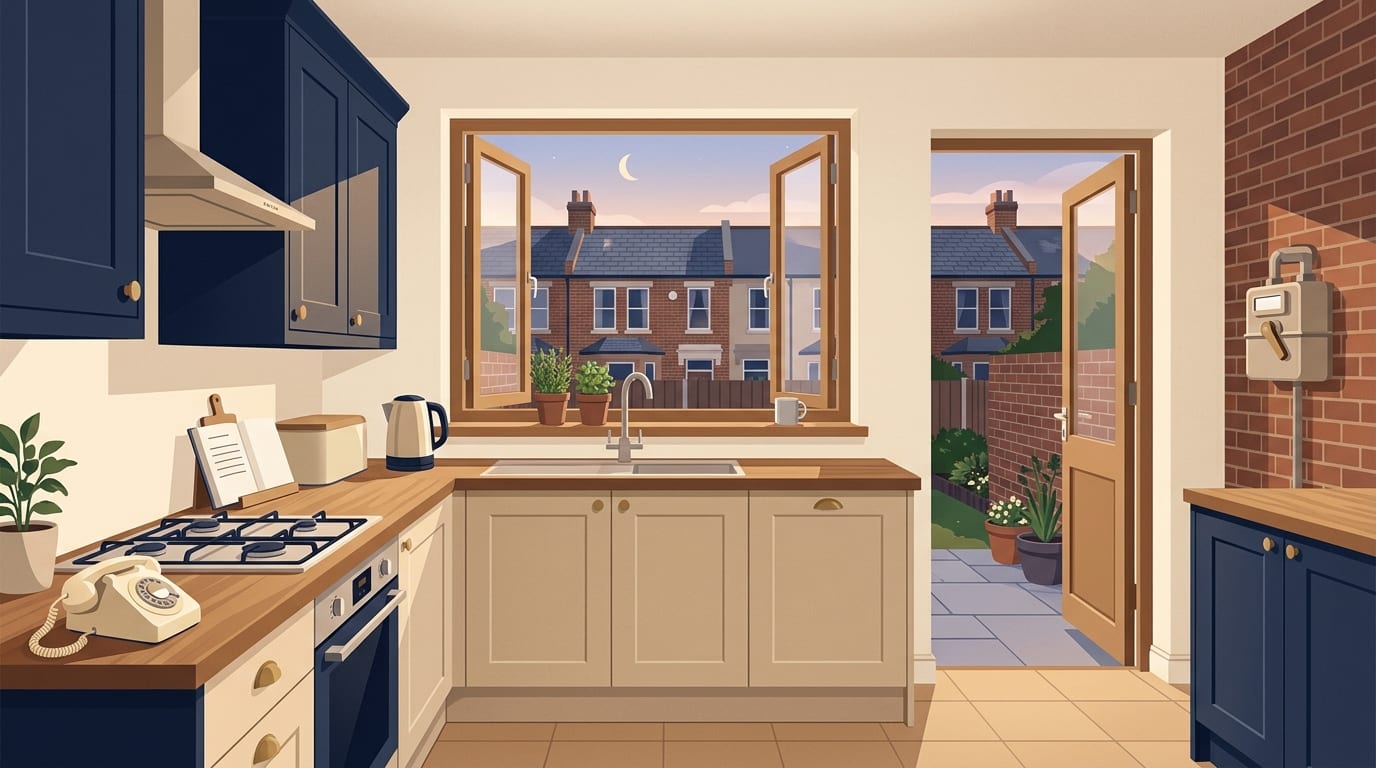
- Open all doors and windows to let fresh air into the property.
- Shut off the gas supply at the meter control valve, if you know where it is.
Opening doors and windows lets fresh air into the property while you wait for help. Leave the windows open even if the weather is cold.
Only shut off the gas at the meter control valve if you already know where it is. Do not search for it or force it. If you are unsure, tell the call handler.
What not to do
Certain everyday actions can ignite escaping gas. When you are dealing with a suspected leak, the things you avoid doing are just as important as the steps you take.
- Make sure not to turn any electrical switches on or off.
- Extinguish all naked flames immediately.
- Stop smoking and do not light any matches or lighters.
- Open doors manually if you have electronic entry phones or electronic locks.
- Do not touch any gas fittings or attempt to test pipes yourself.
Do not turn lights, sockets or electrical appliances on or off. Leave them exactly as they are until a professional tells you it is safe.
If you have electronic entry phones or electronic locks, open the doors manually rather than using them.
Who to call and what they will ask
The 0800 111 999 number connects you to the central emergency service for Great Britain. Answering the call handler's questions clearly helps them understand the situation.
The table below shows the details you should have ready when you speak to the emergency operator.
|
Information to provide |
What the operator needs to know |
|---|---|
|
Your details |
Your name and phone number so they can contact you. |
|
Location |
The exact address or location of the suspected leak. |
|
Occupancy |
How many people are currently at the property. |
|
The smell |
Where the smell is strongest and how long you have noticed it. |
|
Impact |
Whether neighbours are affected by the smell. |
|
Access |
Any special circumstances or access information for the engineer. |
These details are drawn from official safety guidance on what to do if you smell gas.
Customers on the Priority Services Register get temporary cooking and heating appliances and warm blankets in an emergency, so it is worth signing up in advance if someone in your home needs extra help.
Gas smell or carbon monoxide?
People often worry about carbon monoxide when they smell gas, but the two problems present very differently. Carbon monoxide has no smell, so a gas smell and carbon monoxide are different problems.
If you can smell gas in your hallway or kitchen, you are dealing with a natural gas leak rather than a carbon monoxide build up. However, faulty gas appliances can produce carbon monoxide alongside a natural gas leak, meaning the two dangers can happen at the exact same time. The same 0800 111 999 emergency number applies if you suspect carbon monoxide is escaping from an appliance.
Every year around 7 people die from gas related carbon monoxide poisoning. Because it has no smell, you need to know the symptoms and have a carbon monoxide alarm.
Signs of carbon monoxide poisoning
Carbon monoxide has specific symptoms. If you or your family experience these symptoms and think you may have been exposed to carbon monoxide, you must act immediately. Get urgent medical advice from your GP or an accident and emergency department.
According to the Health and Safety Executive, the symptoms of carbon monoxide poisoning include several distinct warning signs. Do not ignore them.
- Headaches or dizziness.
- Breathlessness or difficulty breathing normally.
- Nausea and feeling sick.
- Loss of consciousness.
- Tiredness and extreme fatigue.
- Pains in the chest or stomach.
- Erratic behaviour.
- Visual problems.
If you notice these signs and may have been exposed to carbon monoxide, get urgent medical advice from your GP or A&E straight away. If you suspect carbon monoxide is escaping from an appliance, call 0800 111 999.
After the emergency visit
After an emergency visit, any appliance or pipework that was affected needs to be checked or repaired by a Gas Safe registered engineer. By law, it is illegal to use a gas appliance you suspect is unsafe. You must turn it off and leave it alone until a Gas Safe registered engineer has checked it.
Many plumbers are also heating engineers, but not all plumbers are registered to work on gas. You must match the person to the job carefully. Anyone doing gas work in domestic premises must be a Gas Safe registered engineer and competent in that specific area of gas work.
When you hire an independent engineer to fix the capped pipe or broken boiler, you are protected by the Consumer Rights Act 2015. Under this law, a service must be carried out with reasonable care and skill. If the engineer does a poor job or fails to fix the leak properly, you can ask for the poor work to be put right at no extra cost.
Services arranged by phone, online or in your home usually carry a 14-day cooling-off period. However, this does not automatically apply to urgent repairs that the customer has specifically asked for. If you need official guidance on your consumer rights, you should contact Citizens Advice.
Having the appliance checked
When you hire an engineer to repair the leak, you must verify that they are legally allowed to do the work. Anyone doing gas work in a home must be Gas Safe registered and competent in that area of gas work. Registered engineers carry an ID card.
When the engineer arrives at your door, ask to see their Gas Safe Register ID card. Check the front of the card for their photograph, the start and expiry dates, and their unique licence number. A genuine engineer will always be happy to hand the card over for you to inspect.
You must then turn the card over and check the back. The back of the ID card lists the specific types of gas work they are qualified to do. An engineer might be qualified to work on gas boilers but not gas fires or gas cookers. You must check that their listed competencies cover the exact appliance you need fixing.
You can confirm an engineer is registered by calling the Gas Safe Register helpline on 0800 408 5500. You can also read more about finding the right tradesperson in our guide on what to check before you hire a local plumber. Never attempt to repair a gas pipe or appliance yourself, as DIY gas work is illegal and puts your entire household at risk.
Landlord responsibilities for gas safety
If you rent your home, your landlord holds specific legal responsibilities for the gas appliances inside it. Landlords must arrange an annual gas safety check for every gas appliance and flue they provide in the property. This check must be carried out by a Gas Safe registered engineer.
Once the check is complete, the landlord must give the tenants a copy of the gas safety record. If you smell gas in a rented property, you must still call the 0800 111 999 emergency number yourself to make the building safe. Once the emergency is over, you should contact your landlord immediately so they can arrange the necessary repairs.
Preventing problems with a service and an alarm
The best way to avoid a gas leak or carbon monoxide exposure is to keep your appliances in excellent condition. Gas appliances, flues and pipework should be serviced at least annually. Having your boiler and gas appliances serviced annually is the best way to avoid potential problems arising.
You should never attempt to service appliances yourself. Always hire a registered engineer for the job. You can find out more about what this involves and typical costs in our guide on how much a boiler service costs. Alongside a service, you should also look at getting your central heating ready for winter so your system runs safely and efficiently when the weather turns cold.
Carbon monoxide alarms are strongly recommended as an early warning system for your home. You should choose an alarm that meets British Standard EN 50291 and carries a British or European approval mark such as a Kitemark. Follow the manufacturer's instructions for where to fit it.
Remember that a carbon monoxide alarm is only a backup measure. It does not replace regular maintenance and safety checks by a Gas Safe registered engineer. The official guidance for homeowners advises that gas appliances, flues and pipework are serviced at least annually.
Scotland, Northern Ireland and bottled gas
The emergency advice for smelling gas depends slightly on where you live and what type of gas you use. The 0800 111 999 number is for Great Britain.
If you live in Northern Ireland, the national gas emergency number for Great Britain does not apply. Northern Ireland has its own dedicated gas emergency line. You will need to check with your specific gas network operator to find the correct emergency contact number for your area, and you should keep this number saved in your phone.
If your home uses bottled gas, such as liquefied petroleum gas, the procedure is also different. You should follow the specific emergency instructions provided by your gas supplier, and keep them somewhere you can find them quickly.
Common questions
Can I turn my electricity back on after a gas leak?
You must not turn any electrical switches on or off while there is a suspected gas leak in your home. Wait for advice from the emergency service or a Gas Safe registered engineer before you use lights or electrical appliances again.
Will the emergency engineer fix my boiler?
After an emergency visit, you will need a Gas Safe registered engineer to check or repair any affected appliance. Ask for a fixed price quote before they start.
Do I have to pay for the emergency call-out?
Calling the National Gas Emergency Freephone on 0800 111 999 is free. Ask what applies to you when you call. A Gas Safe registered engineer's repair is a separate job, so ask for a fixed price quote.
Should I shut off the gas at the meter myself?
Only if you already know where the meter control valve is. Do not search for it or force it, and do not touch any other gas fittings. If you are unsure, tell the call handler on 0800 111 999.
Next steps
If you suspect a gas leak or a carbon monoxide problem, you must act quickly and calmly. Follow this checklist to keep your home and your family safe.
- Call the national emergency number on 0800 111 999 immediately.
- Open all doors and windows to ventilate the building.
- Turn off the gas supply at the meter if you know how to do it safely.
- Avoid using all electrical switches, naked flames and matches.
- Follow the call handler's advice while you wait for the emergency engineer.
- Hire a registered professional to check your appliances once the emergency is over.
When the emergency service has made your home safe, you will need a qualified professional to find the underlying fault and complete the repair. You can use our directory to find a plumber near you who holds the right Gas Safe qualifications for the job.
Find a top rated plumber near you
4,869 plumbers across the UK, each ranked on their Google rating and the number of reviews behind it. Start with your county: