Fitting a water softener typically costs around £1,250 for a mid-range unit fully installed in 2026. This price covers both the softener unit and the plumbing labour to connect it to your incoming water main. Hard water is common across many parts of the UK, and while softening it reduces scale in your hot water system, there are water rules to follow before you fit one, including giving notice to the water company in England and Wales.
How much does a water softener cost?
The total cost depends on the type of unit you choose and how difficult it is to fit in your home. Defined jobs such as fitting a water softener are usually quoted as a fixed price, rather than charged by the hour. A quote is a fixed price, whereas an estimate is simply a rough guess that can change. You should always ask the plumber to confirm that their written quote includes VAT, parts and all materials.
This table shows typical installed prices for basic, mid-range and high-end systems, including both the unit itself and the labour to fit it.
|
System grade |
Typical installed cost |
|---|---|
|
Basic system |
£540 to £1,000 |
|
Mid-range system |
£940 to £1,900 |
|
High-end system |
£1,750 to £2,900 |
These are typical published prices for 2026 and local quotes will differ. Plumbers in London and the South East generally charge more for their time.
If you are buying the unit yourself and paying a plumber just for their labour, the price of the equipment varies heavily depending on the technology it uses. This table shows typical supply only prices for the different types of softeners and descalers on the market.
|
Unit type |
Typical supply price |
|---|---|
|
Salt-based softener |
£400 to £1,500 |
|
Salt-free softener |
£500 to £2,000 |
|
Dual-tank softener |
£1,200 to £3,000 |
|
Magnetic or electronic descaler |
£50 to £300 |
These are typical published prices for 2026 and local quotes will differ. If you arrange the work directly, installation labour is usually charged at £30 to £50 an hour, often with plumber call-out charges that cover the first hour of work. As a fixed price, the labour alone typically costs between £150 and £600.
A basic installation takes 1.5 to 3 hours and the labour costs £150 to £250. This applies when the pipework is easy to reach and the drain connection is straightforward. A moderate job takes 2 to 4 hours and costs £200 to £400. A complex installation takes 4 to 6 hours and costs £300 to £600. The job becomes complex if the plumber has to reroute pipes, work in a very cramped space, or drill through thick outside walls to add new drainage.
How a water softener works
True water softeners use a chemical process called ion exchange. The unit contains a tank full of resin beads that attract the dissolved minerals that cause hard water. As your mains water passes through this tank, the ion exchange process replaces the calcium and magnesium with sodium.
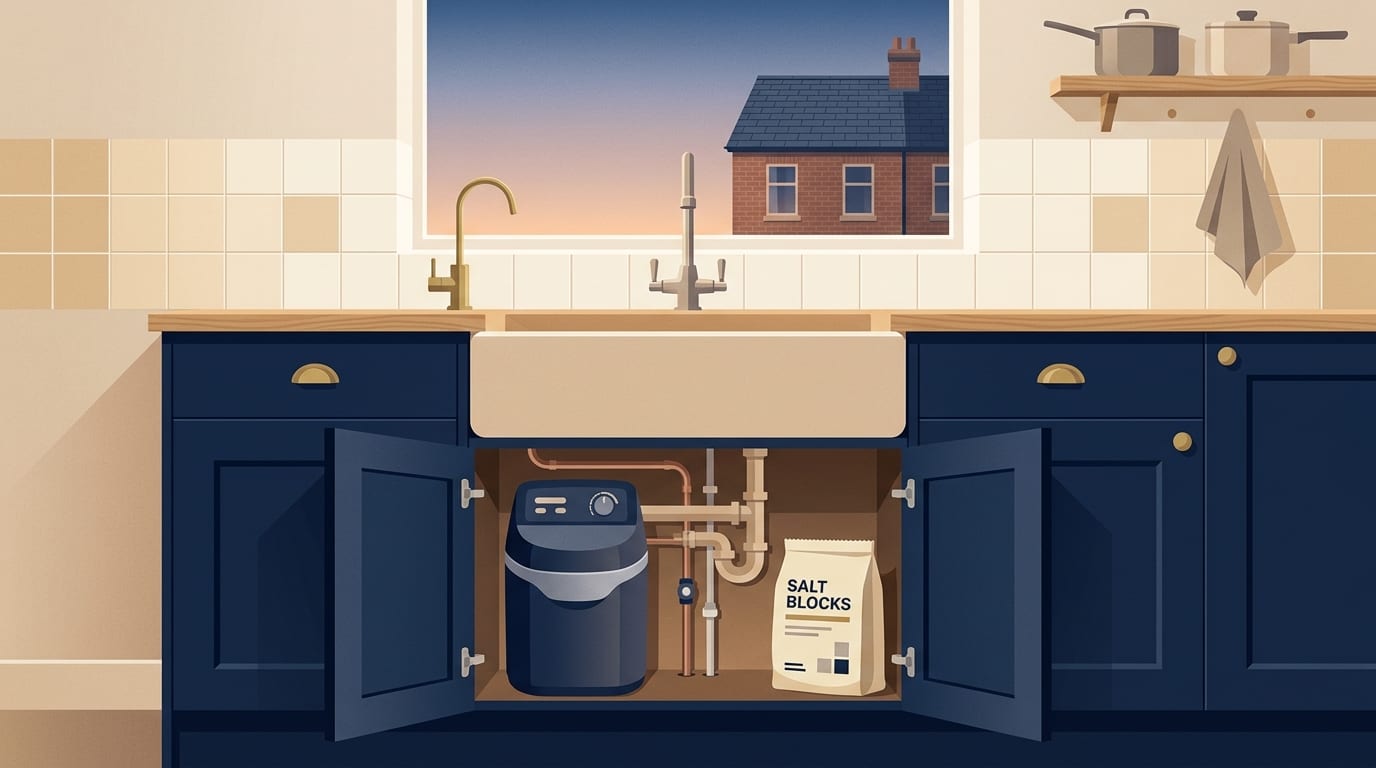
Because the resin beads eventually fill up with calcium and magnesium, the softener needs to clean them regularly. It does this by flushing the beads with a salty brine solution from a separate tank. This cleaning cycle is called regeneration, and it washes the trapped minerals down the drain. This is why you must continually top up the machine with blocks or bags of salt.
You will also see salt-free units and magnetic or electronic descalers sold alongside traditional softeners. Salt-free units are designed to condition the water rather than remove the minerals, while magnetic and electronic devices simply strap onto the outside of your water pipe. These products do not use the ion exchange process or salt. Magnetic and electronic descalers are the cheapest units in the price table above, but salt-free units are not cheaper than salt-based softeners.
Is your water hard enough to need one?
Hard water naturally contains calcium and magnesium. Limescale is a natural, harmless result of these minerals being heated or left to dry on surfaces. How hard your water is depends entirely on where you live and the local geology. Rainwater picks up these minerals as it filters through rocks like chalk and limestone before it reaches the reservoirs.
You do not need to buy a testing kit to find out if you live in a hard water area. Your local water company publishes the exact hardness of each supply area. You can find this information easily by doing a postcode search on their website or by calling their customer services team.
Hard water is completely safe to drink. In fact, hard water forms a protective film inside lead and copper pipes. If water is softened below 100 mg/l as calcium carbonate, it becomes more corrosive to pipework. This highly softened water could dissolve plumbing metals such as lead, copper, brass and nickel.
Drinking water, babies and sodium
Because the ion exchange process swaps calcium and magnesium for sodium, the Drinking Water Inspectorate advises that some softeners can add significantly to the sodium content of your drinking water. This extra sodium may risk breaching the official drinking water standard for sodium. To avoid this, it is advised that consumers keep an unsoftened supply to the kitchen tap for drinking and cooking.
There are also strict medical guidelines regarding babies and softened water. The NHS advises that you must always use fresh tap water to make up baby formula. You must not use artificially softened water, and you must not use water that has been boiled before.
There are no health-based guidelines or limits for water hardness. The minerals in hard water are natural and safe for you to consume. You are fitting a softener purely to protect your plumbing and appliances from scale, not to make the water safer or healthier to drink.
What installation involves
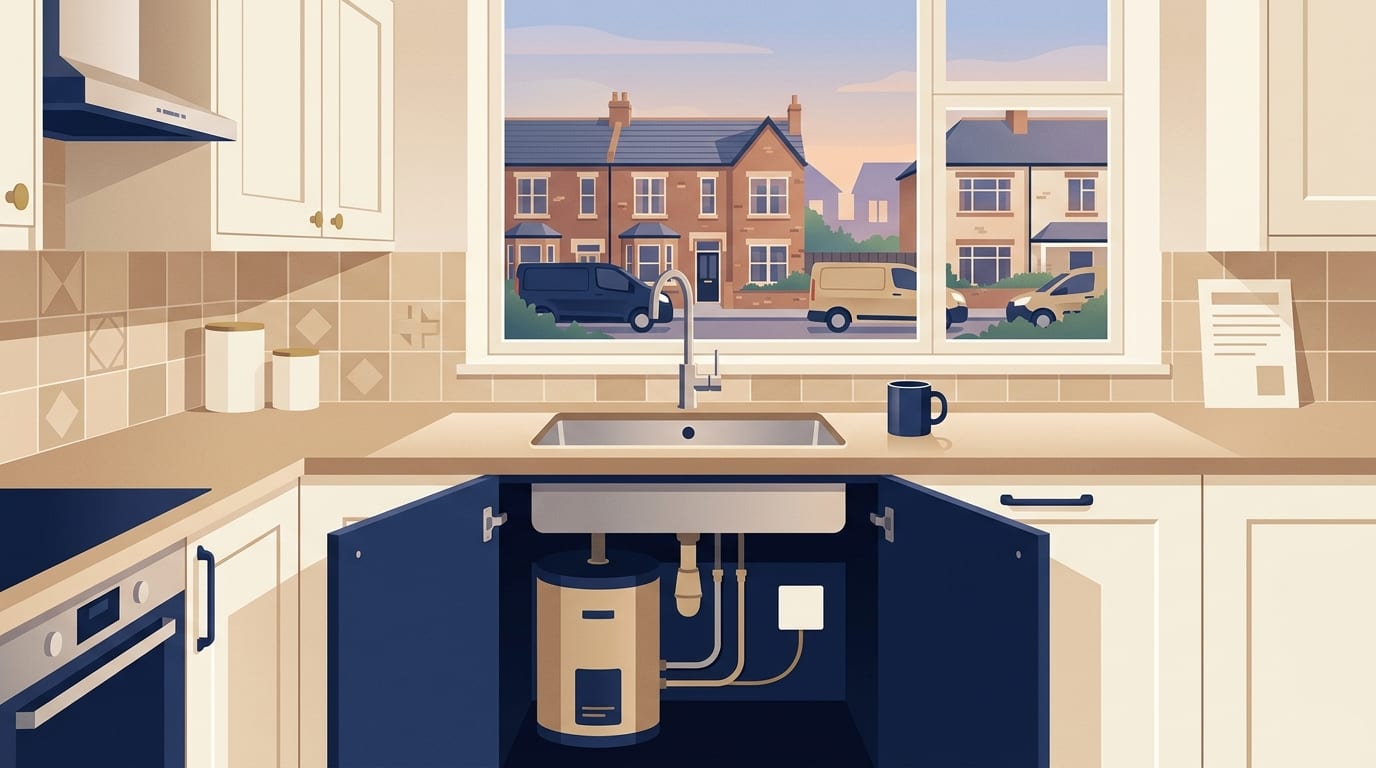
Fitting a water softener typically takes two to four hours. The plumber will usually install it close to where the main water supply enters your property. This is often under the kitchen sink, in a utility room or in a garage. They will begin by turning off your main stop tap to isolate the water supply.
A proper installation requires several specific plumbing connections to ensure the system works safely and legally. The plumber will handle the following steps.
- Connecting the unit to the incoming main water supply with a bypass valve.
- Splitting the pipework so the main kitchen tap remains unsoftened for drinking.
- Fitting a drain connection for the salty waste water produced during regeneration.
- Installing backflow prevention through non-return valves to protect the public water supply.
- Connecting the unit to a nearby electrical socket, where the model needs power for its timer and controls.
The bypass valve is an essential part of the setup. It allows you to isolate the softener and run normal hard water through your home if the unit ever breaks down, leaks or needs a service. When choosing a softener, look for WRAS approval. While WRAS approval is not legally compulsory, it is one of the easiest ways to show that a product meets the water fittings requirements.
Under the Consumer Rights Act 2015, any service you pay for must be carried out with reasonable care and skill. If the plumber does a poor job or leaves the system leaking, you can ask for the poor work to be put right at no extra cost. Services arranged by phone, online or at your home usually carry a 14-day cooling-off period. You can find more details on your consumer rights through Citizens Advice.
The water rules on fitting a softener
If you live in England and Wales, you cannot simply buy a water softener and plumb it in without telling anyone. Under regulation 5 of the Water Supply (Water Fittings) Regulations 1999, anyone proposing to install a water treatment unit which requires the use of water for regeneration or produces a waste water discharge must give notice to the water undertaker.
You must not begin the installation without the water company's consent. They cannot withhold their consent unreasonably, and they have ten working days to respond. If they do not respond within ten working days, consent is treated as given.
There is a general exemption in the rules that allows approved contractors to start certain plumbing work without giving notice. However, this exemption does not cover water treatment units. Even if you hire a highly qualified plumber, you or the plumber must always give notice to the water company before fitting a softener.
The Drinking Water Inspectorate advises that you always use a qualified plumber and check in advance with your water company that the device meets the regulations. You can find a competent professional through WaterSafe, the national register of approved plumbers. WaterSafe members belong to approved contractor schemes run by the APHC, CIPHE, SNIPEF or WIAPS. They are trained in the Water Fittings Regulations, and approved contractors issue a Certificate of Compliance showing that the work meets legal requirements.
Running and servicing costs
Once the unit is fitted, you have to pay for salt, annual servicing and occasional testing. The resin beads need regular salt replenishment to keep working, and you must follow the manufacturer's advice on cleaning and maintenance to keep the system safe.
Salt costs £5 to £10 a bag. Most households use one to two bags a month, depending on how much water they use and how hard their local supply is. You must keep a constant supply of salt in the brine tank, otherwise the unit will stop softening the water entirely.
Annual servicing costs between £50 and £100. A plumber will check the bypass valves, clean the brine tank, inspect the drain connection and ensure the regeneration cycle is working properly. Regular backwashing and maintenance are important to stop bacteria building up inside the resin tank.
Water testing kits cost £10 to £30. You can use these simple kits to check that the unit is still softening the water effectively over time. If the test shows the water is becoming hard again, it usually means the unit needs a service or the resin beads need replacing.
Renting a softener instead
If you do not want to pay the large upfront cost of buying a unit, renting a softener is a common alternative. Renting a softener costs £20 to £30 a month. This allows you to spread the cost and test whether you actually like having softened water in your home before committing to a permanent purchase.
You will usually still have to pay for the installation labour, which costs around £350. Sometimes this installation fee is included. Check what the monthly fee covers, such as servicing and repairs, and how long you are tied in for, and remember you will still need to buy salt.
Is a water softener worth it?
Deciding whether a water softener is worth the money means weighing the upfront and running costs against the practical benefits to your home. Because there is no health benefit to softening your water, the decision is entirely about protecting your plumbing, your boiler and your appliances.
The benefits of softening include reduced scale in hot water systems and better lather and efficiency of washing machines and dishwashers. You will spend less time scrubbing limescale off shower screens and taps, and soap and shampoo lather more easily. Protecting your heating system from scale buildup could also save you money on boiler repair costs in the long run.
However, you must factor in the ongoing cost of salt and annual servicing, plus the physical space the unit takes up in your kitchen cupboards. If you have a large family using a lot of hot water every day, the benefits of protecting your boiler and showers may well outweigh the installation costs.
Common questions
Can you drink softened water?
The Drinking Water Inspectorate advises keeping an unsoftened supply to the kitchen tap for drinking and cooking. The ion exchange process swaps calcium and magnesium for sodium, and some softeners can add significantly to the sodium content of the water. Artificially softened water should not be used to make up baby feeds.
How do you test for hard water areas in the UK?
You do not need a home test kit to find out if your area has hard water. Your local water company publishes the exact hardness levels for every supply area they manage. You can find this information by simply entering your postcode on their website.
What is a whole house water softener?
A whole house softener is installed right where the mains water enters your property. It treats the water flowing to your taps, showers, hot water system and appliances, leaving only the main kitchen cold tap unsoftened so you have a safe supply for drinking and cooking.
Does a water softener need a service?
Yes, you should have your water softener serviced annually. Regular backwashing and salt replenishment are important to keep the unit safe and effective. A yearly service ensures the bypass valve, drain connection and resin tank are all clean and working properly.
How much does water softener installation cost?
The labour to fit a water softener typically costs £150 to £600 as a fixed price, depending on how complex the pipework is. A basic installation takes under three hours, while complex jobs involving new drainage through thick walls can take up to six hours.
Next steps before you hire
If you are ready to get quotes for a water softener, follow these practical steps to make sure the job is done safely and legally.
- Check your local water hardness on your water company's website to confirm you actually need a unit.
- Look for a plumber who is registered with WaterSafe and trained in the Water Fittings Regulations.
- Ask the plumber to confirm in writing that they will leave your kitchen cold tap unsoftened for drinking.
- Ensure the plumber includes backflow prevention and a bypass valve in their written quote.
- In England and Wales, give notice to your water company and wait for consent, or for ten working days to pass without a reply, before any installation work begins.
Once you have your consent and understand the ongoing costs of salt and servicing, you can find a plumber near you to connect your new system safely.
Find a top rated plumber near you
4,869 plumbers across the UK, each ranked on their Google rating and the number of reviews behind it. Start with your county: