In 2026 an electric underfloor heating system typically costs £40 to £90 per square metre to fit, and a wet system typically costs £100 to £190 per square metre. The basic rule for most homes is that an electric system is cheaper to install, but a wet system is cheaper to run.
Where your job falls in those price ranges depends heavily on your property. Fitting underfloor heating in a new build or a new extension sits at the lower end of the price scale. This is because the floor is just a bare concrete slab ready for the pipes or cables to be laid. Retrofitting a system into an older property sits at the higher end of the scale. The tradesperson has to pull up old floors, deal with existing floor heights, and work around skirting boards and doors.
The installation of the heating system itself typically takes one to four days. However, preparing the floor beforehand and waiting for the final floor surface to be finished will add significant time and disruption to the project.
Wet and electric systems explained
Electric underfloor heating uses thin heating mats or loose cables hidden beneath your floor covering. A standard electric system uses around 150W of power per square metre. Because the mats are so thin, they do not raise the floor level very much. This makes electric heating a straightforward choice when you are retrofitting a single room, particularly a bathroom or a kitchen.
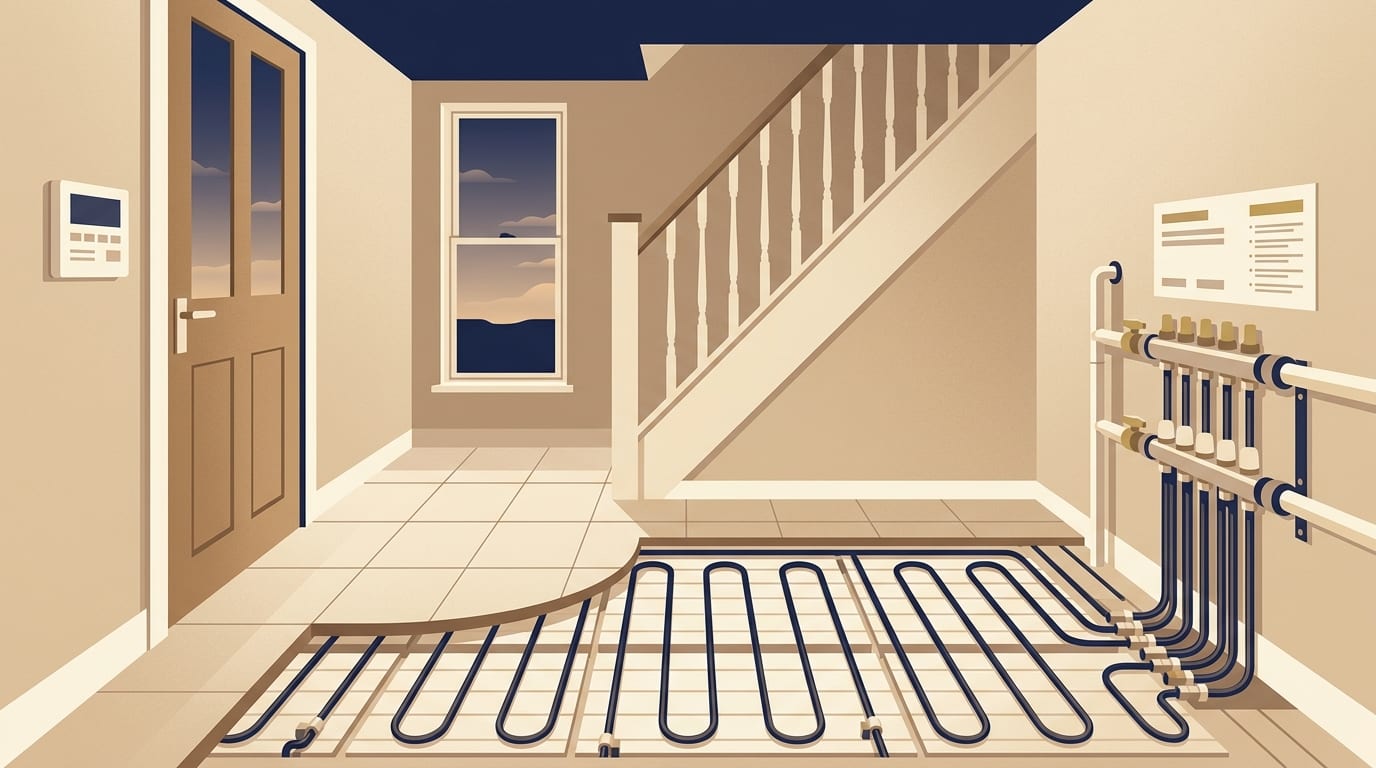
Wet underfloor heating uses continuous loops of plastic pipework laid across the floor. Warm water flows through these pipes, turning the entire floor into a gentle radiator. Traditional wall radiators heat the air, creating draughts as the warm air rises to the ceiling and falls as it cools. Underfloor heating distributes heat evenly from the ground up, meaning you feel comfortable at a lower overall room temperature.
Because the floor has such a large surface area, the water inside the pipes does not need to be as hot as the water in a small wall radiator. A wet system runs at around 30 to 45 degrees, compared with around 65 to 75 degrees for standard radiators. This lower temperature makes wet systems highly efficient, and it is why they pair so well with an air source heat pump, which also operates best at lower water temperatures.
Prices per square metre and per room
The table below compares the installation costs for electric and wet systems across different room sizes.
|
Room size |
Electric system cost |
Wet system cost |
|---|---|---|
|
Small toilet (2 square metres) |
£160 to £180 |
£340 to £380 |
|
En suite (4 square metres) |
£240 to £300 |
£600 to £720 |
|
Small room (10 square metres) |
£500 to £1,100 |
£850 to £1,500 |
|
Medium room (12 to 14 square metres) |
£600 to £980 |
£1,200 to £1,600 |
|
Living room (20 square metres) |
£800 to £2,000 |
£1,700 to £3,000 |
|
Large space (40 square metres) |
£2,000 to £4,200 |
£3,400 to £6,000 or more |
These figures are typical published prices for 2026, and local quotes will differ depending on your home and the finish you choose. Prices in London and the South East are usually higher than the rest of the UK.
Whole house installation costs
Fitting underfloor heating throughout an entire house is a major construction project. It is usually only done during a full property renovation or a new build, because every floor in the house has to be lifted and replaced.
For a two-bedroom terrace house with a floor area of around 65 square metres, an electric system costs £2,600 to £5,850. A wet system in the same house costs £6,500 to £12,500.
For a three-bedroom semi-detached house of around 95 square metres, expect to pay £3,800 to £8,550 for electric heating and £9,500 to £18,000 for a wet system.
For a large four bedroom detached house of around 150 square metres, an electric system costs £6,000 to £13,500. A wet system for this size of property costs £15,000 to £28,500.
Extra costs to budget for
The price of the heating system itself is only one part of the job. Preparing the floor and making good afterwards involves several extra costs that catch people out.
- Floor screeding costs about £430 for an average room and is poured over wet system pipes to protect them and hold the heat.
- The screed must fully cure before the heating is switched on, which can take several weeks and delay your final flooring.
- Insulation boards must be laid under the heating system so the warmth travels up into the room rather than escaping down into the ground.
- Raised floor levels from the screed or insulation boards can mean your doors no longer fit and will need trimming by a carpenter.
- Upgrading your consumer unit costs about £525 and is often necessary if an electric system adds too much load to your existing electrical circuits.
- Removing an existing wall radiator costs about £200, or you can pay about £275 to have one moved to a different wall.
- New flooring costs £15 to £100 per square metre depending on whether you choose budget laminate or high end tiles.
What underfloor heating costs to run
Electric systems are cheaper to fit but more expensive to run, because standard mains electricity costs more per unit than gas. Annual running costs for an electric system range from £25 to £50 for a small toilet, and £50 to £90 for an en suite bathroom. A medium kitchen costs £140 to £275 a year to run, while a living room costs £230 to £460.
Wet systems cost more upfront but are significantly cheaper to run. The annual running costs for a wet system are £15 to £30 for a small toilet, and £25 to £50 for an en suite. A kitchen costs £70 to £130 a year, and a living room costs £100 to £200. To give you an idea of hourly costs, manufacturers estimate that water underfloor heating in a 25 square metre room costs roughly 26p an hour to run.
These running costs are typical estimates, not guaranteed savings. What you actually pay depends on your energy tariff, how well insulated your floors are, and how many hours a day the heating runs. Underfloor heating takes longer to warm a room than a radiator does, so it is often left on at a low, steady temperature rather than being switched on and off for short blasts.
You must also factor in maintenance. Electric systems have no moving parts and require very little upkeep. Wet systems are part of your central heating plumbing and need annual maintenance which costs £80 to £150 a year. This is often done at the same time as your annual boiler service.
Who should install your system
Electric underfloor heating systems must be safely connected to your mains supply. While a competent tradesperson can lay the heating mats, the final connection to the electricity supply should always be made by a qualified electrician.
Wet systems should be installed by a competent heating engineer or a plumber. If your new wet system is being connected to a gas boiler, and gas pipework or boiler adjustments are required, that work must be done by a Gas Safe registered engineer. Never attempt gas work yourself.
You can check an engineer is registered by asking to see their Gas Safe ID card when they arrive. The back of the card shows exactly which types of appliance they are qualified to work on. You can also check their registration by calling the Gas Safe Register on 0800 408 5500, checking their website, or by texting the word Gas followed by the engineer's seven digit licence number to 85080.
It is illegal to use a gas appliance you suspect is unsafe. If you have any concerns, turn the appliance off and do not use it until a Gas Safe registered engineer has checked it. You can find official guidance on gas safety on the Health and Safety Executive website.
Consumer rights and getting a quote
When you gather prices for your project, always ask for a fixed written quote. A quote is a promise to do the work at an agreed price, and the trader cannot charge you more unless you agreed to extra work or the original price was an obvious mistake. An estimate is only the trader's best guess, though the final price must still be reasonable.
A proper written quote should include:
- The cost of all materials including the pipes, mats, manifolds, and thermostats.
- The labour charges for laying the system and testing it.
- The cost of pouring the floor screed if you are having a wet system fitted.
- The final electrical connection and the issue of a compliance certificate.
- The removal and safe disposal of any old radiators and waste materials.
- Whether parts, materials and VAT are included in the final figure.
Under the Consumer Rights Act 2015, a trader must do the work with reasonable care and skill. If they have not, you can ask them to fix the problem. They should do this within a reasonable time and without causing you too much inconvenience. If they cannot or will not fix the poor work, you can ask for a partial or full refund.
Always put any complaints in writing. If you cannot agree with the tradesperson, alternative dispute resolution is a way to settle the matter without going to court. You can read more about your rights on the Citizens Advice website.
Building regulations and paperwork
In England, certain types of plumbing and electrical work must be notified to a Building Control Body unless the work is done by an installer registered with a Competent Person Scheme. Notifiable work includes installing a new or replacement heating system or boiler. Adding a radiator to an existing heating system is also notifiable, though there are some circumstances where it may not need notifying.
If you are fitting an electric underfloor heating system, installing new or replacement fuse boxes or electrical circuits must be notified. Any alterations to electrical installations around a bath or shower are also classed as notifiable work.
A registered installer will notify the local authority on your behalf and issue a certificate of compliance when the job is finished. Underfloor heating does not automatically need Building Regulations approval in every single case, so you should ask your installer exactly what will be notified and what certificate you will receive. You can read the official rules on building work replacements on the government website.
Is underfloor heating worth it?
Wet systems are a big investment but offer low running costs and comfortable, even heat. They free up valuable wall space by removing the need for bulky radiators. They are highly recommended for new builds, extensions, or major renovations where the floors are already being dug up.
Electric systems are much cheaper to fit and are excellent for small, defined spaces where you want a warm floor underfoot, such as a conservatory or when you are fitting a new bathroom. However, their higher running costs mean they are rarely the best choice for heating an entire house.
If you have perfectly good floors in a carpeted bedroom and simply want the room to be a little warmer, ripping the floors up to lay heating pipes may not be worth the cost or the disruption. Think carefully about your long term plans before committing to the work.
Common questions
Why is underfloor heating installation cost higher for older homes?
Retrofitting underfloor heating into an existing home costs more than fitting it in a new build. This is because the old flooring must be removed, the subfloor prepared, and room heights adjusted to accommodate the new insulation and screed. In a new build, the pipes are simply laid onto the base concrete before the final floor is finished.
What is the typical electric underfloor heating cost for a small bathroom?
For a small en suite bathroom of around four square metres, an electric system costs between £240 and £300 to install. It is a very popular choice for bathrooms because the thin heating mats do not raise the floor level significantly, and the warmth helps to dry wet floors quickly.
How can I keep my underfloor heating running cost down?
The most effective way to keep your running costs low is to ensure your floor is properly insulated before the system is laid. Without thick insulation boards beneath the pipes or cables, the heat will escape down into the ground instead of warming your room. Using a programmable thermostat to control exactly when the heating runs will also help manage the cost.
Does underfloor heating cost more to run than radiators?
It depends on the heat source, how well the home is insulated and how long the heating runs, so there is no guaranteed saving. A wet system works at a lower water temperature than radiators, which suits a heat pump. An electric underfloor system will usually cost more to run than a gas fired radiator system, because mains electricity costs more per unit than gas.
What to do next
If you are ready to move forward with your project, these are the practical steps to take.
- Decide whether the lower installation cost of an electric system or the lower running cost of a wet system suits your budget best.
- Check your electrical consumer unit to see if it has the capacity for a new electric heating circuit.
- Measure your room accurately so you can give tradespeople a clear idea of the floor area when you first speak to them.
- Ask your installer how the extra floor height will affect your doors, skirting boards, and the transition to the hallway.
- Request three written quotes from local plumbers or heating engineers, making sure they include all materials, parts and VAT.
- Confirm exactly who will make the final electrical connection and handle any building regulations paperwork.
When you are ready to get quotes and start your project, you can find a plumber near you to talk through your options and get a fixed price for the work.
Find a top rated plumber near you
4,869 plumbers across the UK, each ranked on their Google rating and the number of reviews behind it. Start with your county: