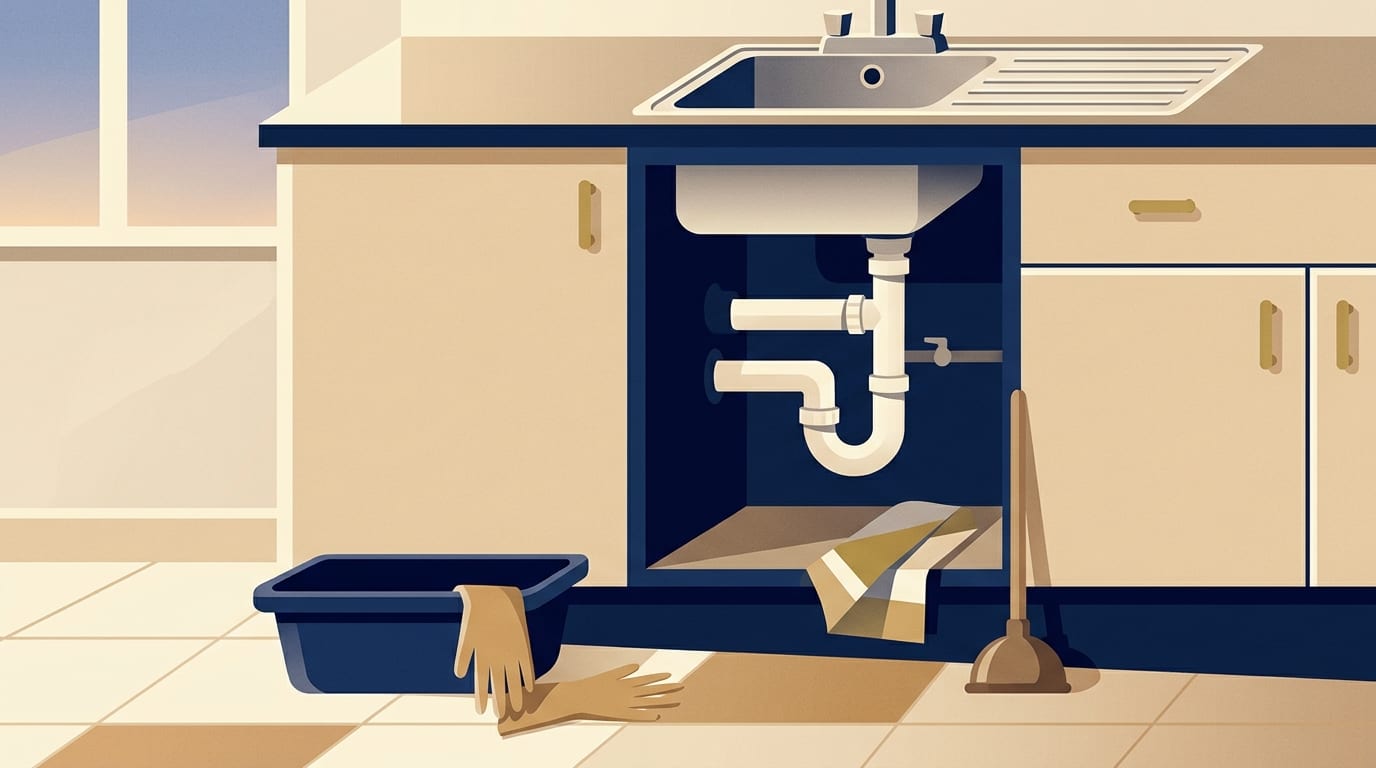
Stop using the sink immediately and put a bowl or a bucket under the leak to catch the water. If the leak is coming from a supply pipe, turn off the water at the small isolating valve on that pipe or at the main stop tap. Most under-sink leaks come from loose or worn joints, a worn trap or tap connectors, and a plumber typically charges about £100 to £140 for a minor leak under a sink in 2026.
What to do first when the sink is leaking
Finding water inside your kitchen unit is stressful, but taking immediate action will limit the damage to your property. The very first thing you must do is stop using the sink completely. Do not pour any water down the plughole and do not turn the tap on. Open the cupboard doors and clear out all your cleaning products, cloths and bins so you have a clear view of the pipework at the back.
Place a bowl or a bucket directly under the leak to catch the drips and stop the water spreading across the floor. If the water is coming from a high pressure supply pipe, you must turn off the water immediately. You can usually do this at the small isolating valve on the pipe that feeds the tap. An isolating valve is a small valve that shuts off water to the tap, usually operated by turning a flat screw slot a quarter turn with a screwdriver.
If you cannot find an isolating valve, or if it is seized solid, turn off the water to the whole house at the main stop tap. A stop tap or stopcock is the main valve that controls your home supply, usually found under the sink or in the hallway. If there is water anywhere near electrics, such as a waste disposal unit, a dishwasher connection or a plug socket, switch off the electricity at the consumer unit only if it is safe to reach. Never touch wet electrical fittings, and call an electrician if you suspect water has reached the wiring.
Damp cupboards and chipboard base units can swell, warp and rot very quickly when exposed to standing water. You must dry the area thoroughly with old towels as soon as the leak is contained. Check the floor underneath the unit to ensure water has not seeped through to the floorboards or the ceiling below. If you need help locating your main valve, you can read our guide on how to find your stopcock.
Where under sink leaks usually come from
The plumbing under a kitchen sink involves several interconnected parts, and a leak can develop in any of them. The trap is the curved pipe directly under the plughole that holds a small amount of water to stop drain smells entering the kitchen. The waste pipe carries the dirty water away from the trap to the outside drains. The tap tails or flexible connectors are the braided hoses or copper pipes that feed hot and cold water to the tap.
The joints connecting these parts are often compression joints, which are nut-and-ring fittings designed to create a watertight seal. Most under-sink leaks come from compression joints and nuts that have loosened over time. This loosening is often caused by vibration from a nearby washing machine, temperature changes as hot and cold water flow through the pipes, or simply being knocked by heavy items during routine cleaning.
Inside many of these fittings are rubber washers that create the watertight seal. These rubber washers flatten and harden over time, eventually failing to hold the water back. If your home has older plumbing, you might find an old metal trap under the sink. These older metal traps often leak from long-term corrosion or worn threads that can no longer hold tight. Modern plumbing uses plastic traps, but a cracked plastic trap is another possible reason for a sudden leak.
Misaligned pipework is another cause of dripping water. If the pipes were forced into position when the sink was installed, this puts constant stress on the joints until they eventually pull apart. Cracked plastic fittings are frequently caused by overtightening. Homeowners often use heavy grips to force a dripping plastic nut tight, which cracks the plastic thread and makes the leak worse. Finally, a partial blockage in the waste pipe causes back pressure in the system, which makes leaks appear while the sink drains.
How to tell which part is leaking
Before you call a tradesperson, it helps to know whether the problem lies with the clean water coming in or the dirty water going out. You can usually work this out by observing when the leak happens. A leak that is there when the sink is not in use and the tap is completely off points to the supply side or a joint on the incoming pipework.
Supply pipes operate under constant mains pressure. Because of this pressure, a leak on a supply pipe will usually drip, spray or run continuously until you physically shut off the isolating valve or the main stop tap. A leak that shows only when the sink drains points directly to the waste pipe or the trap. Waste pipes are not under constant pressure and rely entirely on gravity to move water.
Waste pipes only carry water when you empty a bowl or run the tap down the plughole. If the cupboard floor remains completely dry overnight but a puddle appears immediately after you drain the washing up water, the trap or the waste pipe connections are the source of the problem. Knowing who is responsible for the plumbing can also save you time when dealing with a leak.
The local water company is responsible for the main in the street and the supply pipe up to your property boundary. The property owner is responsible for all pipes on their land and inside the building. This means a leak under your kitchen sink, whether on the supply or the waste side, is normally the property owner's responsibility, so tenants should tell their landlord.
What you can safely check yourself
There are a few safe checks you can carry out to pinpoint the exact location of the drip, but you must avoid making the problem worse. Dry the area completely with a towel so you have a clear, dry surface to observe. Place a bucket and several fresh towels underneath the pipework before you test anything.
Run the tap slightly or empty a small bowl of water into the sink and watch the pipes closely to see where the first drop appears. Water is deceptive and often runs down the outside of a pipe before dripping from the lowest point, meaning the actual leak might be higher up than the puddle suggests. Run a piece of dry tissue paper lightly over the pipes to feel for hidden dampness on the upper joints and connections.
Take clear, well-lit photos of the leak and the overall pipework layout to show the plumber. This helps them understand the setup and arrive with the correct replacement parts. Do not force anything if you attempt to tighten a joint by hand.
Overtightening with grips can crack plastic fittings instantly, turning a minor drip into a bigger leak. Anyone who dismantles pipework takes on the risk of making the situation worse. If you are unsure where the water is coming from or how to proceed, you can read our advice on how to detect a water leak safely.
When to call a plumber
While tightening a clearly loose nut by hand might solve a minor issue, many under sink leaks require a professional tradesperson to ensure they are fixed permanently. Call a plumber if you cannot locate the exact source of the leak after drying the area and watching the pipes closely. You should also call for help if fixed pipework hidden in walls or floors is damaged.
Hidden pipes require specialist tools and trade knowledge to access, repair and make good safely. If the plumbing system under your sink is complex, perhaps involving multiple connections for a dishwasher, a washing machine and a waste disposal unit, a plumber can check that all these connections are secure and properly aligned. Call a professional if the pipework looks poorly installed, heavily modified or misaligned, as simply tightening the nuts will not fix the underlying tension.
You should seek expert help if you suspect wider drainage problems beyond the kitchen sink cupboard. Clear signs of wider problems include repeated leaks appearing in different joints, persistent foul smells coming from the plughole, loud gurgling noises when the water drains, or slow draining elsewhere in the house. A plumber can identify whether a severe blockage further down the line is causing back pressure that is blowing the trap joints apart.
What a plumber charges to fix a sink leak
When you hire a professional to fix a leak, the price will depend heavily on where you live and the severity of the problem. The table below shows typical 2026 prices for repairing a leak under a sink or basin.
|
Type of repair |
Rest of UK |
London and South East |
|---|---|---|
|
Minor leak under a sink or basin |
£100 to £140 |
£130 to £170 |
|
Major leak under a sink or basin |
£140 to £180 |
£170 to £220 |
These figures are typical 2026 prices and local quotes will differ. The overall range for fixing this type of leak is £80 to £250 across the UK and £120 to £350 in London and the South East.
Estimates vary. Some 2026 price lists put labour for a minor repair at £80 to £150 in total and a plumber call-out at £60 to £120, which can cover the first hour at your property. A simple trap replacement takes 20 to 40 minutes.
The WaterSafe 2026 plumber cost guide states that the hourly rate is £40 to £70 on average across the country. They note that this rate is usually higher in London and the South East. They also state that an emergency call-out fee ranges from £60 to £120. They recommend getting at least three quotes before agreeing to work and using a recognised scheme such as the WaterSafe Register. You can read more about how tradespeople structure their pricing in our guide to plumber call-out charges.
What pushes the cost up
The final bill for fixing a leak can rise above the standard rates depending on several specific factors. Emergency out-of-hours work costs significantly more than a standard booked weekday appointment. Same day, evening, weekend and bank holiday call outs typically cost 1.5 to 2 times the standard rate plus a call-out fee.
Estimates vary, but some 2026 price lists put emergency call outs at £120 or more before any labour time is added. The location of the leak and its severity also affect the price heavily. Exposed pipework inside a spacious, empty cupboard is quick to diagnose and work on, while concealed pipework hidden behind fixed units takes much longer to access.
Accessible minor leaks are often fixed in under an hour. Major or hidden leaks can take several hours or require more than one visit to resolve completely. Your location in the UK is a major price driver, and London and the South East cost more.
The time a job takes will ultimately dictate the labour cost. A simple repair takes about 30 to 45 minutes, while a full trap or pipework reconfiguration takes 1 to 2 hours of labour. The cost of materials for this type of job is usually low, with a new plastic trap costing just £5 to £20. Making good any water damage to the cupboard, the skirting boards or the ceiling below can add to the bill, so ask whether it is included.
Common problems when hiring for an emergency
When water is pouring into a kitchen cupboard, people often rush to hire the first person who answers the phone. This pressure can lead to poor decisions and inflated bills. One of the most common problems customers face is emergency call outs where no price is given before attendance.
You should always insist on knowing the call-out fee and the hourly rate before you give your address. Another frequent issue involves call handling firms that advertise as local plumbers but actually pass jobs on to subcontractors at heavily inflated rates. Hourly work that drags on is another risk if the plumber does not have the right parts on their van, leaving you paying for their time while they visit a merchant.
You should also watch out for heavily marked up parts, which is why asking for a breakdown of materials is important. Never agree to large cash payments up front, and always ensure you receive proper paperwork for the job. Choosing a tradesperson on price alone can also be a mistake, as an unusually low hourly rate can be a warning sign, so ask what is included.
What to ask for in the quote
Getting a clear price before work begins is the best way to avoid unexpected bills and disputes. A quote is a fixed price for the exact job described, while an estimate is only a rough guess that can change as the work progresses. Ask the plumber to confirm their charges in writing before they start dismantling your pipework. A proper written quote should contain a clear breakdown of all the costs involved so you know exactly what you are paying for.
A reliable quote will include:
- Whether the final price includes VAT.
- The exact cost of parts and materials such as a new trap or pipe sections.
- The call-out fee and what specific amount of time it covers.
- The hourly rate if the job takes longer than the first hour.
- A clear description of the work they will carry out to fix the leak.
You have strong legal protections when hiring a tradesperson to work in your home. Under the Consumer Rights Act 2015 a service must be carried out with reasonable care and skill. If the plumber leaves the pipes leaking, uses the wrong fittings or causes new damage, you can ask for poor work to be put right at no extra cost.
Services arranged by phone, online or at home usually carry a 14-day cooling-off period. However, this cooling-off period does not automatically apply to urgent repairs you have specifically asked the tradesperson to carry out immediately to stop a leak. You can check Citizens Advice for official guidance on your consumer rights and how to enforce them.
There is no legal licence for general water plumbing in the UK, which is why qualifications and approved schemes matter so much. WaterSafe members are trained in the Water Fittings Regulations.
Common questions
How do you fix a leak under a bathroom sink?
The plumbing under a bathroom basin works in a similar way to a kitchen sink. You must dry the area thoroughly, place a bowl underneath and check whether the water comes from the high pressure supply pipes or the low pressure waste trap. If a supply pipe is leaking, turn off the isolating valve on that specific pipe to stop the flow before calling a plumber to replace the joint.
Why does the pipe under my sink leak only when the water drains?
A leak that only appears when the sink empties points directly to a problem on the waste side of the plumbing. This usually means the trap or the waste pipe has a loose connection, a cracked plastic fitting or a worn rubber washer that fails under the weight of the water. A partial blockage in the pipework can also cause back pressure that forces water out of the joints as the sink drains.
Can I tape a leaking pipe under the sink?
Plumbing tape is made for sealing threaded joints when they are first assembled, not for wrapping the outside of a leaking pipe. It is unlikely to give a lasting fix and can make the real problem harder for a plumber to deal with.
Do I need a WaterSafe registered plumber for a sink leak?
There is no legal requirement to use a licensed plumber for general water repairs, as there is no mandatory licence for water plumbing in the UK. However, a member of the WaterSafe scheme is trained in the Water Fittings Regulations, which is a sensible check.
Next steps once it is fixed
Once the plumber has repaired the leak, you need to ensure the area recovers from the water damage. Follow these simple steps to finish the job safely.
- Leave the cupboard doors open and completely empty for a few days to ensure the air circulates.
- Allow the chipboard base and the wooden floorboards underneath to dry out completely.
- Run a full bowl of hot water down the sink and check the newly tightened joints for any signs of moisture.
- Keep the receipt or invoice from the plumber in case the leak returns and you need to use your consumer rights.
A small drip under the sink can quietly ruin an expensive kitchen unit and rot your floorboards if left unchecked. Getting a professional to replace worn washers and secure the pipework is a sensible way to protect your home from serious water damage. When you are ready to get the problem sorted, you can find a plumber near you to diagnose the leak and provide a fixed quote.
Find a top rated plumber near you
4,869 plumbers across the UK, each ranked on their Google rating and the number of reviews behind it. Start with your county: