Which? finds that boiler cover is rarely a cost-effective option for most households because the regular payments add up, but it can make sense for some people. In a June 2025 Which? survey, homeowners paid an average of £183 a year for a boiler cover package. This guide explains how these policies work, what hides in the small print, and how to check your existing warranties so you can decide what suits your home.
What boiler cover actually is
Boiler cover is a contract with a provider. You pay a monthly or yearly fee to a provider. If your boiler stops working, the provider sends an engineer to fix it without charging you the full cost of the repair.
These packages vary heavily in what they protect. Basic cover usually protects just the boiler unit itself and the main controls. Wider packages cover the whole central heating system, which includes your radiators, radiator valves and the hot water cylinder if you have a system or regular boiler. Some packages go further and include general plumbing repairs and home electrics.
If you buy a wider package that includes general water plumbing, remember that there is no legal licence for water plumbing in the UK. This is why qualifications and approved schemes matter. WaterSafe is the national register of approved plumbers, with approved contractor schemes run by APHC, CIPHE, SNIPEF and WIAPS.
Providers often ask for an annual service. This is a safety and efficiency check carried out by a Gas Safe registered engineer. By law, only engineers on the Gas Safe Register are allowed to work on gas appliances. The engineer will inspect the boiler, check the flue, and test the gas pressure to ensure the appliance is burning gas safely. The Health and Safety Executive advises that gas appliances are serviced at least annually.
These plans are designed to spread the cost of maintenance and provide a fast response in an emergency. They do not act as a savings account. If your boiler runs perfectly all year and you never call an engineer out, you do not get your money back.
What boiler cover typically costs
The price you pay depends on the level of cover you choose and how long you have been with the provider. Annual boiler cover packages averaged £183 a year in a June 2025 Which? survey of homeowners, with some costing up to £300.
Some providers charge much less in the first year. The table below shows one example of how steep the jump can be when the introductory offer ends, using prices from summer 2025.
|
Level of cover |
First year price |
Second year price |
|---|---|---|
|
Basic boiler cover |
£150.00 |
£374.52 |
|
Heating, plumbing and electrics |
£228.00 |
£713.16 |
These are examples of prices from summer 2025, not typical prices, and a quote today may differ.
The renewal price trap
One issue to check for with boiler cover is the price increase after twelve months. The introductory price is temporary. When the contract reaches its anniversary, the provider will send a renewal letter with a new, much higher price.
Which? advises checking the price after the first twelve months and shopping around at renewal.
Check your contract for how it renews and how to cancel, so the higher price does not catch you out.
Excess fees, annual limits and boiler age
The monthly or yearly premium is not always the only thing you pay. Many policies include an excess. An excess is a one-off fee charged when the provider sends an engineer out to your home.
The excess is usually £60. A higher excess usually lowers your regular payments, while a lower excess pushes your regular payments up. In a June 2025 Which? survey, 22 per cent of people with boiler cover had a £0 excess, which Which? says is rarely worth it.
Providers also restrict the amount they will pay out for repairs. Some policies limit repair payments to £1,500 a year, while others are unlimited. If a policy has a limit and a repair costs more than this, you may have to pay the difference yourself.
Your boiler's age will dictate whether you can get cover at all. Some policies set maximum ages for boilers they will cover, usually 15 years. Older boilers are more likely to break down, and their replacement parts become harder to find. If your boiler passes the maximum age limit, the provider may refuse to renew the policy or refuse to pay for repairs.
What is usually not covered
Every policy has exclusions written into the small print. Sludge can be an issue. Sludge is a mix of rust and dirt that builds up inside central heating pipes and radiators over time. It blocks pipes, damages the boiler pump, and stops radiators from heating up.
Removing this dirt requires a system clean or a power flush. A power flush involves pumping chemicals through the pipes at high speed. A sludge flush can cost more than £400, and not all providers cover it, so check whether yours does. To protect against sludge, a good heating engineer will fit a magnetic filter on the pipework to catch the metal particles.
Providers also demand that the boiler is maintained properly. Many providers only cover you if you have an annual service, so a missed service could affect a claim.
You must read the terms carefully to see exactly what counts as a valid breakdown.
Cover compared with paying as you go
The alternative to a monthly plan is paying a local heating engineer only when you actually need one. This means saving the money you would have spent on premiums and using it to pay for an annual service and any unexpected repairs.
A one-off gas boiler service typically costs £70 to £110 in 2026, with an average of about £79. The average one-off repair after a service was £156 in a June 2025 Which? survey.
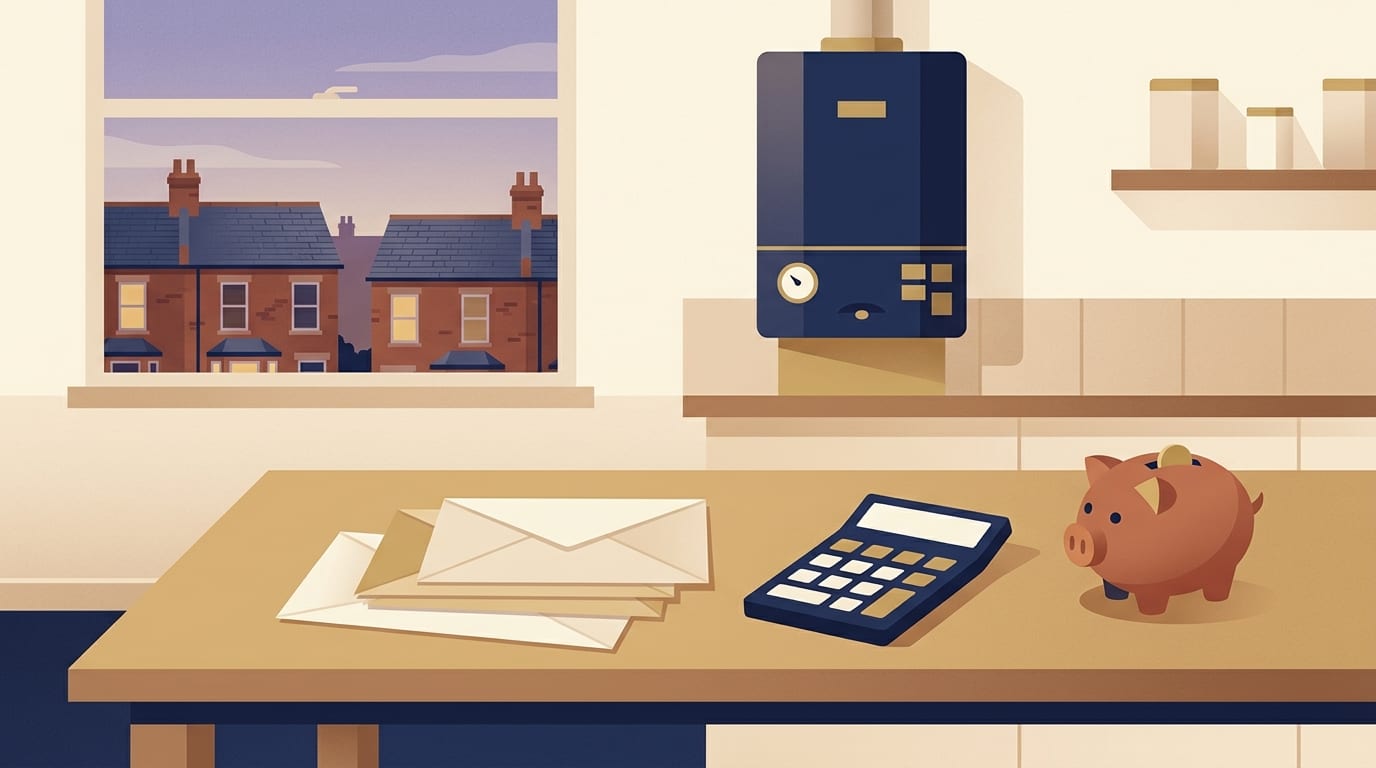
Which? says that for most people boiler cover is not cheaper than paying for services and repairs as needed. You pay the cover fee every year whatever happens. To test your own case, add a service and a typical repair (about £79 plus £156 on these averages) and compare the total with the yearly price of the cover you are offered. This is only a rough comparison, because one large repair can change the result. See the guide to boiler repair costs for what repairs typically cost.
When you hire a local plumber directly, you must be clear on the costs upfront. Emergency call outs where no price is given before attendance are a common problem. You should also watch out for call handling firms that pass jobs on at inflated rates. Always ask if the price includes VAT, parts and materials. Labour rates vary across the UK, and London and the South East cost more. Repairs and small jobs are usually charged by the hour or as a minimum charge, often with a call-out fee that covers the first hour. A quote is a fixed price, while an estimate is just a rough guess that can change.
Check what you already have
Before you buy a new policy, you must check if your boiler is already protected. Overlapping cover is common, and you can end up paying twice for the exact same protection. Some parts of your system might be covered twice, and one major provider explicitly states it will not issue a refund for overlapping cover.
Check your home insurance documents. Boiler cover can come as an extra on home insurance. Check that you are not already paying for boiler cover as an extra on your home insurance before signing up. You should also check employee benefits or packaged bank accounts, as these sometimes include emergency home assistance.
If your boiler is relatively new, it will have a manufacturer warranty. A warranty covers the cost of replacement parts and labour if the boiler develops a fault. The warranty is not automatic. It must be activated within 30 days of installation. The manufacturer may refuse to pay out if the boiler is not properly and regularly serviced. Half of boiler owners said they do not get their boiler serviced annually in a June 2025 survey, and a manufacturer may refuse to pay out on a boiler that has not been serviced.
Under the Consumer Rights Act 2015, a service must be carried out with reasonable care and skill. If a tradesperson recently fitted your boiler and it breaks down, you may have a legal right to free repairs or a replacement from the seller or installer. It is usually easier to prove the fault lies with the installer if the boiler was installed in the last 6 months. You will not have any rights if the boiler is not working because of wear and tear. You can read the official guidance on your rights on the Citizens Advice website.
When an annual policy makes sense
An annual package can still be the right choice in certain situations. The main benefit is predictability. You know exactly what goes out of your bank account each month, and you do not have to find a large lump sum if a pump or circuit board suddenly fails in the middle of winter.
A package also removes the stress of finding a plumber in an emergency. If water is leaking near electrics, you simply call the provider's emergency number instead of ringing around local firms hoping someone is available. If water is near electrics and it is safe to reach, you should always switch off electricity at the mains first, turn off the stop tap, and catch the water in a bucket.
Some landlords take out cover for a quicker response when something breaks. However, a cover package does not replace a landlord's legal duties. Landlords must arrange an annual gas safety check and give tenants the record. See the guide to the gas safety certificate for landlords for what the check involves.
How to compare policies before you sign
If you decide a package is the best route for your home, you need to compare the details rather than just the headline price. Use this checklist to examine the terms before you hand over any money.
- Check the introductory price and ask exactly what the renewal price will be in year two.
- Look at the excess fee and check if it applies to every single call-out.
- Check the maximum boiler age limit to ensure your current boiler qualifies.
- Read the rules on annual limits to see if repairs are capped at a certain amount.
- Search the terms for a sludge flush or power flush to see if it is included or excluded.
- Confirm whether an annual service is included in the price or if you have to arrange it yourself.
- Ask about the 14-day cooling-off period, which usually applies to services arranged by phone or online.
Common questions
Is boiler care insurance a legal requirement?
No, there is no law forcing homeowners to buy cover. You are legally allowed to pay for repairs and servicing as and when you need them. Landlords do have a legal duty to arrange an annual gas safety check, but they do not have to buy a cover package to do this.
Can I get insurance for an older boiler?
Some policies set a maximum boiler age, usually 15 years. If your boiler is older than this, check the age limit before you buy, because some providers will not cover it.
Do I still need to pay for an annual service?
Many packages include an annual service in the yearly fee, so you do not pay for it separately. However, you must ensure the service actually takes place. Many providers only cover you if you have an annual service, and your manufacturer warranty will also demand it.
What happens if someone does gas work without being registered?
By law only Gas Safe registered engineers may work on gas appliances. DIY gas work is illegal. An engineer's ID card shows which types of appliance they are qualified for, and their registration can be checked with the Gas Safe Register. If you smell gas, ventilate the property and call the gas emergency number on 0800 111 999.
Next steps
Deciding how to manage your central heating comes down to checking your paperwork and doing some simple maths. Follow these steps to work out your best option.
- Check your home insurance, bank accounts and employee benefits for existing emergency cover.
- Check your boiler installation date to see if it is still under a manufacturer warranty.
- Find out how much a local heating engineer charges for a standalone annual service.
- Compare the cost of a local service and a typical one-off repair against the yearly price of a cover package.
- Factor the excess fee into your calculations to see the true cost of a call-out.
- Set a calendar reminder for month eleven if you do buy cover, so you can cancel before the price jumps.
Taking the time to weigh up your options ensures you do not pay for protection you do not need. If you decide that paying as you go is the smartest choice for your home, you can use our directory to find a plumber near you who can handle your next service or repair.
Find a top rated plumber near you
4,869 plumbers across the UK, each ranked on their Google rating and the number of reviews behind it. Start with your county: