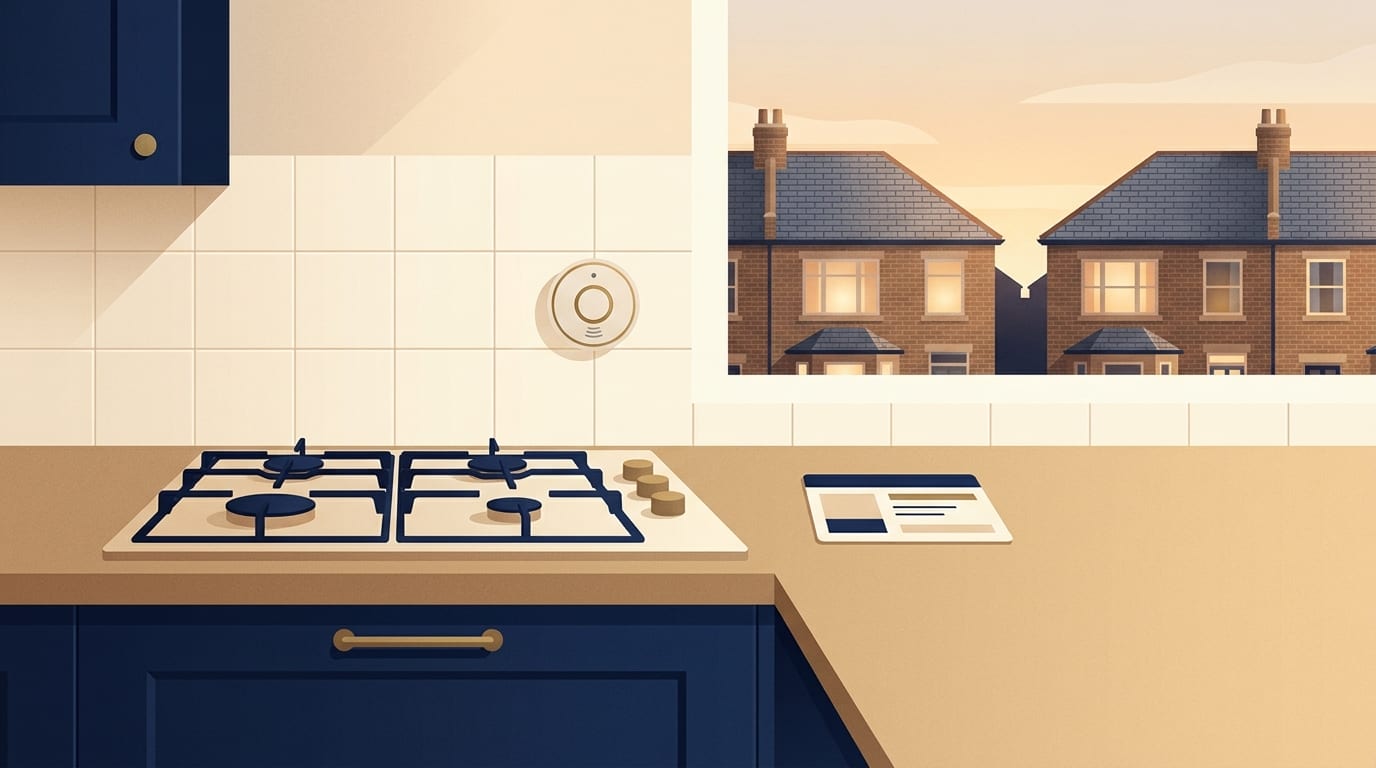
Anyone employed to work on gas appliances in a home must be a Gas Safe registered engineer who is competent for that type of appliance. A like for like gas range cooker connection typically costs from around 80 to 150 pounds in 2026, excluding the appliance itself. Tradespeople answering a consumer question in 2024 and 2025 mostly gave about 80 to 200 pounds for a gas hob. Extras such as new gas pipework, electrical connections or a worktop cut out are charged on top. Whether you are planning a complete kitchen refit or urgently replacing a broken oven, getting a fixed written quote and checking the engineer's credentials will help you avoid hidden costs and unsafe work.
Why gas hobs and cookers need a Gas Safe engineer
By law, only Gas Safe registered engineers may work on gas appliances in the UK. The engineer must be competent in that specific area of gas work, as holding a registration for gas boilers does not automatically cover domestic gas cookers. General handymen and general plumbers cannot fit gas appliances unless they hold this specific registration.
DIY gas work is illegal and highly dangerous. You must never attempt to connect, disconnect, test or adjust a hob, cooker, hose, valve or pipe yourself. Doing so puts your home at risk of gas leaks and carbon monoxide poisoning.
There is one strict exception regarding moving an appliance for cleaning. A free standing cooker with a flexible bayonet connector, which is a push and twist fitting on a gas hose, is not considered readily movable. However, moving one temporarily, such as to clean behind it, is not regarded as gas work under the regulations. Any other installation or reinstallation is classed as gas work and requires a registered professional.
Under the Consumer Rights Act 2015, any service you pay for must be carried out with reasonable care and skill. If an installer does a poor job, you have the right to ask for the work to be put right at no extra cost. If you arrange the installation online, by phone or at your home, you usually have a 14-day cooling-off period to cancel. This does not automatically apply to urgent repairs you have asked for, and you can find more guidance on your consumer rights through Citizens Advice.
What gas hob and cooker installation costs
The table below shows typical prices from two separate sets of figures. The range cooker and removal figures are 2026 labour bands, while the hob figure comes from answers given by tradespeople in 2024 and 2025, so the two should not be combined. None of them include a price for the hob or cooker itself.
|
Installation type |
Typical price range |
|---|---|
|
Like for like gas range cooker connection (2026) |
£80 to £150 |
|
Gas hob connection (answers from 2024 and 2025) |
£80 to £200 |
|
Dual fuel cooker connection (circuits in place) |
£150 to £300 |
|
Removal and disposal of old cooker |
£40 to £100 |
Local quotes will differ. Prices in London and the South East are generally higher than in the rest of the UK. When you ask for a price, make sure you get a quote rather than an estimate. A quote is a fixed price for the job, whereas an estimate is an educated guess that can increase once the work begins. Always check whether the final figure includes VAT, parts and materials. Small jobs are sometimes charged by the hour or carry a minimum call-out fee that covers the first hour of work, while defined jobs like fitting a cooker are usually quoted as a fixed price.
What is included in the price
A proper written quote should cover the full commissioning of the appliance. Commissioning is the process of testing a newly fitted appliance to prove it works safely and meets all manufacturer guidelines. The engineer will check that the room has adequate ventilation, which ensures there is enough oxygen for the gas to burn safely without producing carbon monoxide.
The installer will check the burner operation to ensure the flames are the correct size, shape and colour. They will also test the flame supervision devices. A flame supervision device is a vital safety mechanism that automatically shuts off the gas supply if the flame blows out or fails to light.
Every installation must include a tightness test. A tightness test is a leak check carried out by the engineer. Using a registered engineer to carry out this test and the full commissioning process is a legal requirement, not a recommendation.
What pushes the price up
Costs rise when the job is not a simple like for like swap. If you are changing the position of the cooker or installing a larger appliance, you may need an upgraded or upsized gas supply pipe. This adds 150 to 600 pounds to the bill. Pipe upsizing is charged per metre and depends heavily on how difficult the access is.
Distance and access issues will increase the labour time. If the engineer has to lift floorboards to route new pipes, work in a tight or awkward kitchen, or arrange a two person lift for a heavy range cooker, the price will sit at the higher end of the scale. Fitting a new hob may require modifying the worktop cut out to fit the new dimensions, and one tradesperson's answer put that at around 100 pounds extra.
Dual fuel cookers need a suitable electrical circuit to power the oven. If your kitchen does not already have one, installing a new cooker circuit adds 200 to 500 pounds in electrical work. If your home electrics are outdated and cannot support the new circuit safely, you might need a consumer unit upgrade. The consumer unit is the main fuse box, and upgrading it costs 400 to 900 pounds or more.
Homes that sit off the mains gas grid rely on liquid petroleum gas. An LPG connection or converting a natural gas appliance to run on LPG requires specific parts and expertise, which adds 80 to 200 pounds to the installation cost.
Gas hob or gas cooker
A gas hob is a separate cooking surface built directly into the kitchen worktop. It requires careful measuring and a precise cut out before the gas connection is made.
A gas cooker is a freestanding unit that contains both the hob and the oven in one appliance. These simply slot into a gap between your kitchen units. A range cooker is a larger, heavier version of a freestanding cooker, often requiring multiple people to navigate tight hallways and move it into position safely.
Dual fuel cookers combine the instant heat of a gas hob with the even temperature control of an electric oven. Because they use two different energy sources, any electric work on a dual fuel cooker needs a qualified electrician. While some tradespeople hold qualifications for both gas and electrics, you will often need to hire two separate professionals to complete a dual fuel installation safely.
How to check an engineer before work starts
All Gas Safe registered engineers carry ID cards which tell you exactly which appliances they are qualified to work on. The specific competencies are printed on the back of the card. You should check the card before letting anyone start work on your gas appliances, ensuring they are covered for domestic cookers and hobs.
You can verify their details using the Gas Safe Register Check an Engineer service online. Enter the licence number from the ID card to see the engineer's photo and qualifications.
You can also check their registration using a mobile phone. Text the word Gas followed by the business registration number or the engineer's seven digit licence number to 85080. You will receive a reply confirming whether their registration is active. Alternatively, call the freephone helpline on 0800 408 5500 to speak to the register directly.
What to do afterwards
Once the appliance is fitted and tested, ask the installer whether they can provide a Gas Safe certificate for the installation. Keep any paperwork safe alongside the manufacturer manual.
If you rent the property out, there are extra legal steps you must follow. Landlords must arrange an annual gas safety check covering all gas appliances and flues in the property. They must also give tenants the record of this check. You can read more about what this involves in the guide to gas safety certificates for landlords.
Safety signs and servicing
The Health and Safety Executive advises that all gas appliances, flues and pipework are installed, regularly maintained and serviced at least annually by a Gas Safe registered engineer. For a sense of what servicing costs, see the guide to boiler service cost.
If you ever suspect an appliance is unsafe, turn the appliance off immediately and do not touch it until it has been checked by a Gas Safe registered engineer.
If you smell gas, call the gas emergency number on 0800 111 999. The guide on what to do if you smell gas explains the steps to keep your home safe while you wait.
The Health and Safety Executive strongly recommends carbon monoxide alarms complying with British Standard EN 50291 as one useful precaution. These alarms monitor the air for poisonous gas, but they should not replace regular maintenance. For further details on safety rules, you can read the Health and Safety Executive advice for homeowners and their domestic gas safety frequently asked questions. If you need official guidance over the phone, the Health and Safety Executive Gas Safety Advice Line is available on freephone 0800 300 363 from 9.00am to 5.30pm Monday to Thursday, and 9.00am to 5.00pm on Friday, excluding bank holidays.
Questions to ask for the quote
Ask these questions to ensure you get a fixed price and a safe installation.
- Are you Gas Safe registered and competent to fit gas cookers and hobs?
- Is the mandatory tightness test included in your price?
- Does the quote cover minor feed alterations and the required gas valve?
- Will you remove and dispose of the old cooker for this price?
- Do you charge extra if the worktop cut out needs modifying for the new hob?
- Are parts, materials and VAT included in the final figure?
- Will you provide a Gas Safe certificate once the installation is complete?
Common questions
Can a general plumber fit a gas hob?
Many plumbers are also heating engineers, but not all plumbers are registered to work on gas. By law, only Gas Safe registered engineers may work on gas appliances. You must check their ID card to ensure they are qualified for cookers and hobs before they start work.
Can I install my own gas cooker?
No. DIY gas work is illegal. Anyone working on gas appliances in domestic premises must be a Gas Safe registered engineer and competent in that area of gas work. Connecting a cooker yourself puts your home at risk of gas leaks.
Does moving a cooker to clean behind it count as gas work?
A free standing cooker with a flexible bayonet connector is not considered readily movable. Moving one temporarily, such as to clean behind it, is not regarded as work under the gas safety regulations. However, any other installation or reinstallation is classed as gas work and requires a registered engineer.
Can an electrician fit a dual fuel cooker?
An electrician can wire the electric oven part of a dual fuel cooker, but they cannot connect the gas hob unless they are also Gas Safe registered. You may need an engineer who holds both qualifications, or two separate tradespeople to complete the job safely.
What to do next
Before you hire someone to fit your new appliance, follow these steps to protect your home and your budget.
- Check whether your new appliance requires a like for like swap or a different gas and electrical setup.
- Ask tradespeople for a written quote that includes the tightness test and full commissioning.
- Ask if the price includes removing and disposing of your old cooker.
- Check the engineer's Gas Safe ID card when they arrive and look at the competencies on the back.
- Verify their registration online or by using the text service before they touch your gas supply.
Taking the time to check credentials ensures your new appliance runs safely and legally. When you are ready to gather prices and arrange the work, you can find a plumber near you to discuss the installation.
Find a top rated plumber near you
4,869 plumbers across the UK, each ranked on their Google rating and the number of reviews behind it. Start with your county: