An electric combi boiler typically costs £1,500 to £2,000 to buy, while heat only models start from as little as £400. Having an electric boiler installed typically costs about £1,500 to £4,500, with an average near £3,250. This installation price is comparable to fitting a gas boiler of the same size and type. You should treat this as a total installed cost rather than adding it to the purchase price, as professional quotes usually package the boiler and the labour together.
The final quote depends on how much work is required to adapt your home to the new system. A simple swap of an old electric boiler for a new one will sit at the lower end of the price range. If the installer needs to run a thick new electrical cable from your consumer unit to the boiler, or if they have to alter your pipework extensively, the price will rise.
You should always check whether your written quote includes parts, materials and VAT. While the upfront cost to buy and fit an electric boiler is similar to a gas boiler, the main financial difference is what you will pay to run it over its lifespan.
How an electric boiler works
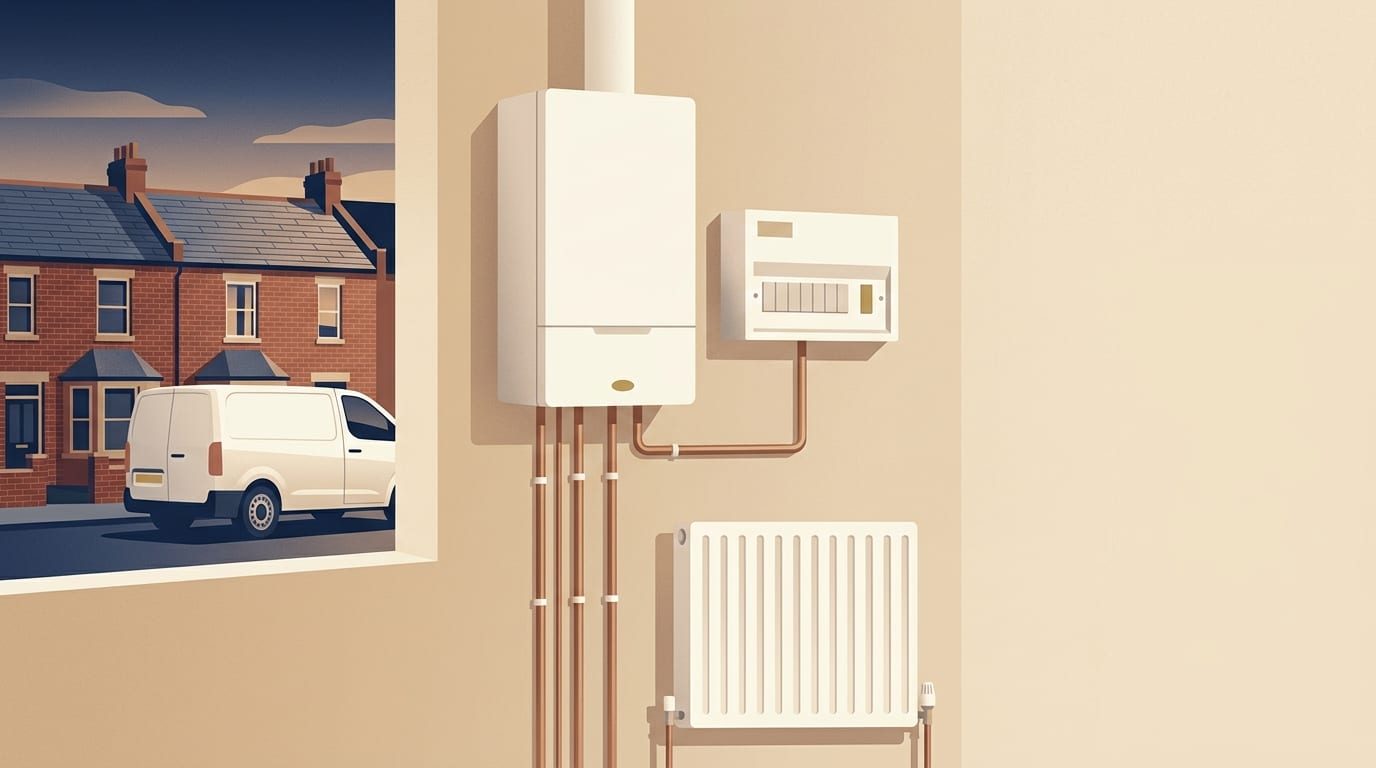
An electric boiler heats water by passing an electric current through a heating element rather than burning gas. It works essentially like a big kettle plumbed directly into your central heating pipework. When your thermostat signals that the house is cold, cold water passes over this internal element, absorbs the heat, and is then pumped around your radiators or directed to your hot water taps.
Because there is no combustion taking place, an electric boiler turns almost all the electricity it uses into heat at the boiler. There are no waste gases produced during this process. This means an electric boiler produces no carbon emissions from the unit itself.
This lack of combustion also means there is no risk of a carbon monoxide leak from the boiler. Furthermore, because there is no burner or fan pushing waste gases out of a flue, electric boilers operate much more quietly than their gas counterparts.
Electric combi, system and heat only boilers
You can buy electric boilers in the same three main types as gas boilers. The right choice depends on the space you have available and how much hot water your household uses at the same time.
- An electric combi boiler heats water on demand as soon as you open a hot tap, meaning it has no internal storage tanks and saves a significant amount of space.
- A system boiler has a built-in pump and valves but needs a separate hot water tank to store heated water, allowing you to run multiple taps at the same time without losing pressure.
- A heat only electric boiler needs both a hot water tank and cold water storage tanks, making it suitable for larger homes with more hot water demand if you already have the tanks in place.
Upgrading to a heat only system is rarely done from scratch due to the vast amount of space required for the tanks. It is usually a straightforward replacement if your home already uses a traditional gravity-fed system. Bear in mind that replacing a hot water cylinder will add to the overall cost if your current one is old or leaking.
Running costs compared with gas
Electricity is significantly more expensive than gas, which makes running an electric boiler a costly ongoing commitment. Under the average energy price cap from 1 October to 31 December 2026, direct debit customers pay 26.32p per unit (kWh) for electricity and 7.97p per unit for gas.
Gas boilers turn most, but not all, of their fuel into heat. Even allowing for that slight loss of heat escaping through a gas flue, each unit of heat you get from electricity costs about three times as much as heat from gas at these rates.
These energy rates change every quarter depending on the wholesale market, meaning your winter heating bills can fluctuate significantly from year to year. The electricity price cap figure currently excludes VAT, because the government removed VAT from electricity bills from 1 October 2026 to 31 March 2027. The gas figure includes VAT at 5 per cent.
You must also pay a daily standing charge just to be connected to the grid, regardless of how much energy you use. For electricity, this is 54.83p a day. For gas, it is 29.68p a day.
This table shows a direct comparison between electric and gas boilers on a few key points.
|
Feature |
Electric boiler |
Gas boiler |
|---|---|---|
|
Fuel price per unit (kWh) |
26.32p |
7.97p |
|
Daily standing charge |
54.83p |
29.68p |
|
Typical maximum output |
15kW or less |
20kW to 40kW or more |
|
Flue needed |
No |
Yes |
|
Typical warranty |
2 to 3 years |
Up to 10 years or more |
These are typical published figures for 2026, and your exact running costs will depend on your energy supplier and how well insulated your home is.
Which homes an electric boiler suits
Electric boilers are generally not suitable for larger homes. A large house loses heat faster and requires a much higher power output to keep the radiators hot, which a standard domestic electricity supply often cannot handle. Instead, they are an excellent solution for properties with specific restrictions.
- Homes off the gas grid, which make up about 15 per cent of UK properties and usually rely on electricity, heating oil or liquefied petroleum gas (LPG).
- High-rise buildings and flats where a flue is difficult to fit.
- Small homes with low heating demand that do not require massive power outputs to stay warm in winter.
- Rental properties with no other gas appliances, where switching to electric heating removes the need for an annual gas safety check.
Because they need no flue to vent waste gases, an electric boiler can go almost anywhere in a property. You can place them in a central cupboard away from an outside wall without worrying about how to route a pipe safely to the exterior.
Size limits and your electricity supply
An average electric boiler is around 15kW or less, with typical sizes ranging from 6 to 14 kW. By comparison, gas combi boilers range from 20kW to 40kW or more. This massive difference in output is why electric boilers struggle to heat large properties.
As a rule of thumb, installers recommend limiting an electric boiler to less than 50 per cent of your property supply fuse size. The main fuse, often located near your electricity meter, dictates the absolute maximum amount of power your home can draw from the grid at one time safely.
If you fit a boiler that draws too much power, running it at the same time as another high-draw appliance could overload the system. For example, if your boiler is running at full capacity and someone turns on an electric shower, the combined load could blow the main incoming fuse and cut off all power to the house.
Your installer should check your incoming electricity supply before giving you a quote. If your home needs a larger main fuse or a new supply cable from the street, that work is done by the local electricity network operator, so ask the installer to include the cost and timescale of any upgrade in the quote.
Who can install an electric boiler
Because there is no gas involved, your installer does not need to be on the Gas Safe Register. However, wiring a powerful boiler requires specific electrical qualifications. You should expect a registered electrician to install the new heavy-duty electrical circuit and a heating engineer to do the plumbing work connecting the boiler to your radiators.
In England, government guidance says the work you must tell a building control body about includes any new electrical circuit connected to the fuse box. You must also notify them about the installation of a new or replacement heating system or boiler, regardless of the fuel type used.
If your project involves refitting a bathroom at the same time, you must also notify building control if new plumbing is installed or existing plumbing is altered. However, like-for-like replacements of baths, toilets, basins or sinks do not need notifying.
Unless your installer is registered with a competent person scheme for electrical and heating work, you must notify building control yourself and pay a fee. A registered installer should notify the local authority for you and give you a certificate of compliance, which you should receive within 30 days of the work being completed.
Servicing and warranties
Even though there are no gas burners to clean and no flues to inspect, manufacturers still recommend an annual service for an electric boiler. This ensures the unit remains safe and operates efficiently throughout the winter.
During a service, a qualified engineer will check the electrical connections for signs of overheating or wear. They will also inspect the internal pump, test the pressure relief valves, and check the central heating water for sludge that could damage the heating elements. This annual check usually comes at a similar price to a regular gas boiler service.
Many manufacturers make regular servicing a condition of the warranty, so check the terms and keep your service records. If you cannot show the boiler has been serviced, the manufacturer may refuse to repair it for free.
You should note that electric boiler warranties are typically two to three years. This is noticeably shorter than gas boiler warranties, which can last up to 10 years or more depending on the brand and the installer used.
Electric boiler or heat pump?
If you are replacing an old heating system in a home without gas, an air source or ground source heat pump is the main alternative to an electric boiler. Both systems use electricity, but they do so in entirely different ways.
A heat pump extracts ambient heat from the outside air or the ground and compresses it to heat your home. Because it moves heat rather than creating it from scratch, a heat pump delivers about three units of heat for each unit of electricity it consumes. An electric boiler only delivers one unit of heat for each unit of electricity.
The government offers a grant to help with the higher upfront installation cost of heat pumps. The Boiler Upgrade Scheme is open to people in England and Wales and gives a grant towards replacing fossil fuel heating systems. The scheme defines fossil fuel systems as oil, gas, electric or liquefied petroleum gas (LPG).
You can get £7,500 towards an air source heat pump or a ground source heat pump. There are also grants of £5,000 towards a biomass boiler and £2,500 towards an air-to-air heat pump.
The Boiler Upgrade Scheme does not pay towards an electric boiler, and there is no grant for a hybrid heat pump system or to replace an existing low carbon heating system. You can read more about air source heat pump installation costs if you want to compare the long-term savings against the higher initial price.
Common questions
What is the cost of an electric boiler per month?
Your monthly cost depends entirely on how much heating and hot water you use and the current price of electricity. Because electricity is roughly three times the price of gas per unit, electric heating results in much higher winter bills than a gas system in the same sized home.
Can I get an electric boiler grant in the UK?
The Boiler Upgrade Scheme does not pay towards fitting an electric boiler. However, if you already have an electric heating system, you can apply for the Boiler Upgrade Scheme in England and Wales to help fund a switch to a heat pump or a biomass boiler.
Are electric boilers better than gas boilers?
Electric boilers are quieter, produce no carbon monoxide and do not require an external flue. However, gas boilers are much cheaper to run and can supply enough heat and hot water for larger homes with multiple bathrooms, which standard electric boilers struggle to do.
Can an electric combi boiler run central heating?
Yes, an electric combi boiler provides both hot water for your taps and heated water for your central heating radiators. It does this on demand as the water passes through the heating element, without needing separate storage tanks.
Do I need a Gas Safe engineer for an electric boiler?
No, because an electric boiler does not use gas, the installer does not need to be on the Gas Safe Register. You will need a qualified electrician to safely connect the heavy electrical load to your fuse box, and a heating engineer to handle the plumbing side.
Next steps
Before you hire an installer to fit an electric boiler, follow this checklist to ensure it is the right fit for your home.
- Check your fuse box and ask an installer to confirm your incoming electricity supply can handle the heavy load.
- Ask whether a combi, system or heat only boiler suits your daily hot water habits best.
- Check that the installer is registered with a competent person scheme for electrical work so they can legally sign off the new circuit.
- Ask if the written quote includes upgrading your main fuse or supply cable if the network operator requires it.
- Compare the running costs of electricity against your current heating bills to avoid winter bill shocks.
- Look into heat pump grants if you have the outside space and want lower monthly running costs over the long term.
When you are ready to get quotes and discuss your options, find a plumber near you to inspect your home and explain exactly what your property needs.
Find a top rated plumber near you
4,869 plumbers across the UK, each ranked on their Google rating and the number of reviews behind it. Start with your county: