The loud bang you hear when a tap shuts off is usually water hammer, which is a pressure shock that happens when moving water stops suddenly. It is often fixable by securing loose pipes, fitting shock arrestors or checking your mains water pressure. You should not ignore the noise because repeated shocks can strain your plumbing joints, and failures can cause damage if pipes rupture.
What water hammer actually is
Water travels through your home plumbing system under pressure. When you open a tap or start an appliance, a heavy column of water flows freely through the pipes. When that flow is cut off suddenly, the water has nowhere to go and its momentum has to be absorbed by the pipework.
This sudden stop creates a shock wave that moves back and forth through the system. A sudden stop of a moving water column creates a pressure spike that can exceed 10 bar. This shock hits a system that is usually designed for a standard 3 to 4 bar mains supply.
The resulting impact is what you hear as a loud bang, and it is sometimes accompanied by a visible shudder in the pipe. It helps to note which tap or appliance is involved when the noise happens.
Why your pipes bang and knock
Fast closing valves are one cause of these pressure waves, because they cut off the water supply very quickly.
Washing machine and dishwasher solenoids snap shut instantly when the appliance has enough water. Single-lever mixer cartridges and ceramic disc taps also shut off the flow abruptly with a very small movement of the handle.
Toilet float valves can also cause the system to shudder. A float valve with a stiff lever is another possible cause, and a plumber can replace it with a delayed action valve or fit an arrestor on the inlet.
Loose pipes and trapped air
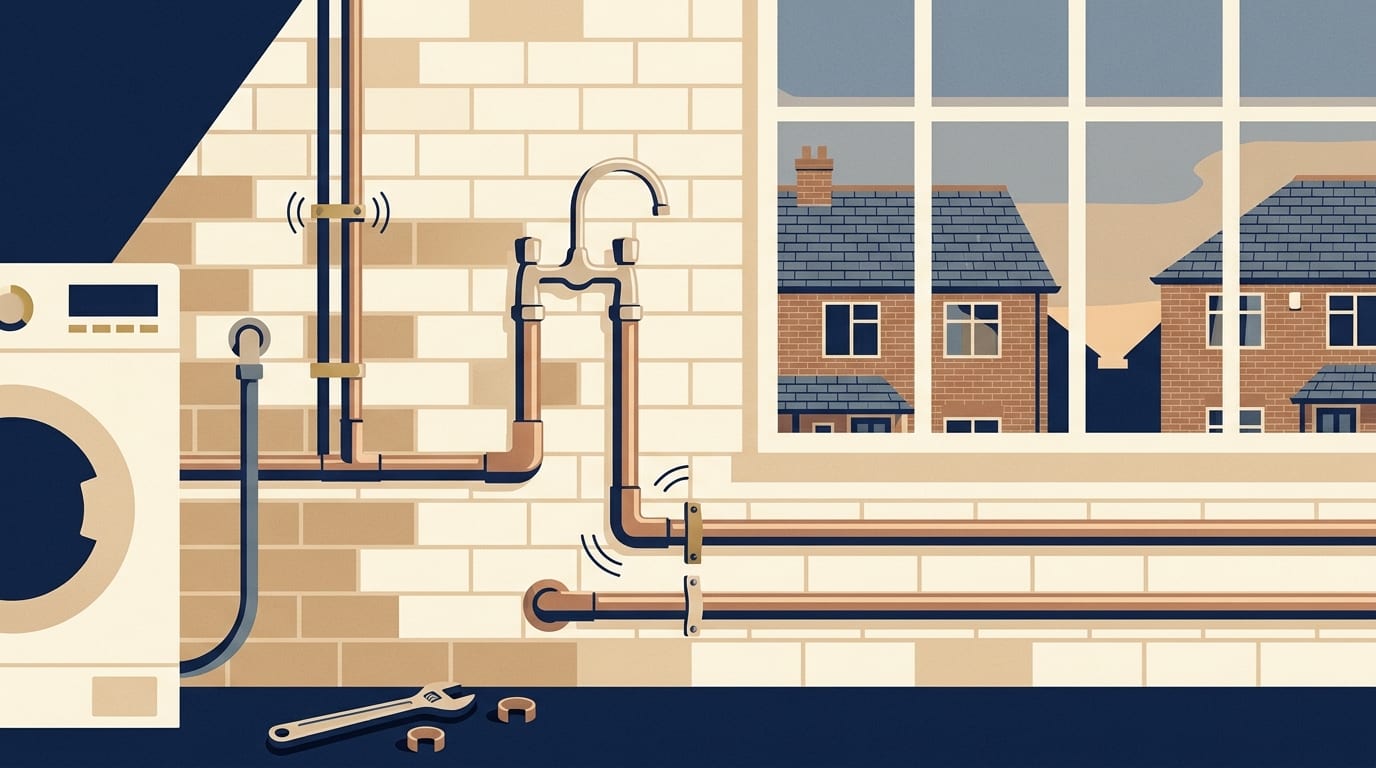
The pressure wave creates physical movement inside the pipework. If the pipes are not securely fixed to the walls or joists, they will hit the surrounding wood or masonry. The simplest method to reduce the noise is to secure loose pipes.
Water hammer occurs most frequently in older pipes. Pipework should be clipped to the spacing in BS EN 806-2.
Your plumbing system usually contains small pockets of air that act as a natural cushion. Air can compress, which can help absorb the shock of a sudden pressure spike.
High water pressure from the mains
The water company is responsible for the main and the supply pipe up to your property boundary. You are responsible for the pipes on your land and inside the building.
As at June 2026, mains pressure above 3.5 bar is a cause of water hammer, and 5 bar or more is treated as over pressure. A plumber should measure it.
You should never attempt to adjust your incoming water pressure yourself. Plumbers carry a pressure gauge to measure the exact force of the water entering your home. If they find that the street pressure is too high for your internal pipes, they can recommend specific valves to safely step it down.
What you can safely check yourself
There are a few user-level steps you can take to understand the problem before calling a professional. One user level step is to run air through the cold water pipework by opening the taps.
- Turn off the main water supply at your internal stop tap.
- Open all the taps in your home to drain the system completely.
- Wait a few minutes, then close all the taps.
- Turn the stop tap back on to refill the pipes.
If draining the system does not work, note exactly when the noise happens and which tap or appliance triggers it. Check any visible pipes under the sink or in the airing cupboard to see if they are loose against the walls. Do not climb into lofts, remove boiler casings or attempt to dismantle any valves.
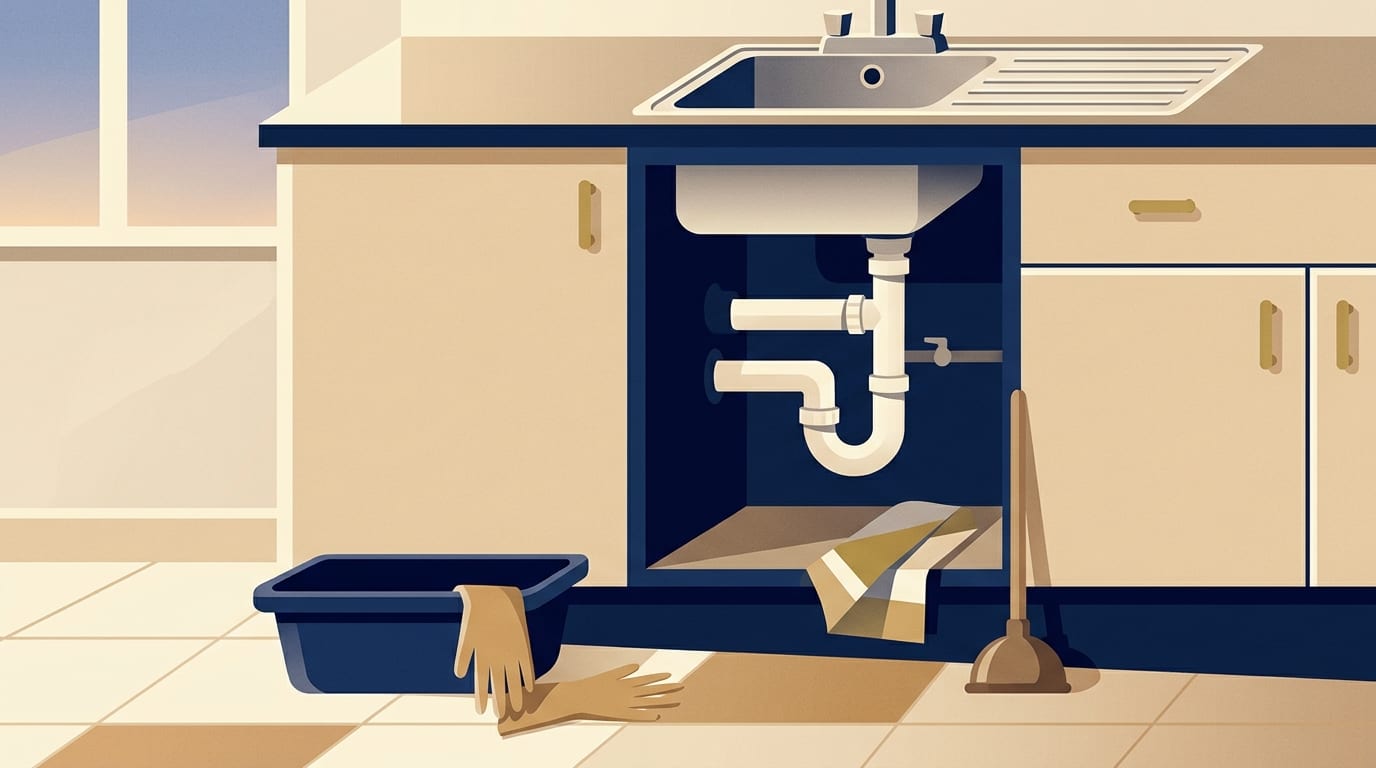
If you see a leak or a damp patch, turn off the stop tap immediately to limit the damage. If water is near electrics and it is safe to reach the consumer unit, switch off the electricity at the mains. Catch any dripping water in a bucket and call a plumber if the noise persists after trying these safe methods.
What a plumber can fit to stop the noise
A plumber can install a hammer arrestor immediately upstream of the fast closing valve that is causing the shock wave.
Where mains pressure exceeds 3.5 bar, the advice is to fit a pressure reducing valve. Setting and fitting it is a job for a plumber.
For a noisy toilet, a plumber will typically replace the old assembly with a delayed-action valve or fit an arrestor on the inlet. They will also inspect your exposed pipework and clip it to the correct spacing to stop physical movement.
There is no legal licence for general water plumbing in the UK. You should look for someone with recognised qualifications. WaterSafe is the national register of approved plumbers, with approved contractor schemes run by APHC, CIPHE, SNIPEF and WIAPS. Its members are trained in the Water Fittings Regulations.
What it typically costs to fix
Plumbers usually charge for their time and the materials required. Repairs and small jobs are typically charged by the hour or as a minimum charge. There is often a call-out fee that covers the first hour of work, and you can expect evening and weekend visits to carry a premium rate. You can check typical plumber call-out charges to see how these hourly rates are structured.
Prices depend on how accessible the pipes are and whether the system needs a simple arrestor or a larger pressure reducing valve. London and the South East usually cost more than the rest of the country.
The table below shows typical 2026 trade prices for these fixes. Local quotes will differ based on your location and the exact problem.
|
Type of repair |
Typical materials cost |
Typical labour time |
|---|---|---|
|
Kitchen tap arrestor |
£20 to £30 |
About 30 minutes |
|
Toilet inlet arrestor |
£15 to £25 |
Varies |
|
Bathroom 22mm arrestors |
£40 to £80 trade price |
1 to 2 hours |
These figures are typical for June 2026, so treat them as a guide only, and local quotes will differ. For a washing machine arrestor job, the price for diagnosis, fitting and testing is £150 to £200. A pressure reducing valve is £200 to £400 at customer prices.
You should be wary of extremely cheap quotes. Cheap jobs often skip essential pipework support and proper pressure checks, which can leave the underlying problem unresolved.
When the noise points to a bigger problem
Water hammer is not just an annoying sound. The constant physical movement and pressure spikes place strain on pipe joints. Failures can cause property damage if pipes rupture or collapse behind walls or under floorboards.
If you notice a drop in flow, see our guide on low water pressure at home. If you suspect a joint has failed but you cannot see the water, you may need to know how to detect a water leak by checking your water meter.
It is also important to note where the sound originates. If the banging or kettling noise comes from your heating system or from inside the boiler casing, this is not standard water hammer. A noise from the heating system should be checked by a plumber or heating engineer.
By law, only Gas Safe registered engineers may work on gas appliances. The engineer's ID card shows which types of appliance they are qualified for, and registration can be checked with the Gas Safe Register. Do not let a general water plumber attempt to diagnose or dismantle a noisy gas boiler.
Questions to ask before you pay
When you hire a plumber to fix noisy pipes, always ask for a written quote. A quote is a fixed price for the agreed work. An estimate is not fixed and the final bill can increase if the job takes longer than expected. Ask the plumber to confirm if VAT, parts and materials are included in the final figure.
You should also ask how they plan to diagnose the fault. A thorough professional will measure the mains pressure with a gauge before recommending a pressure reducing valve. If they suggest fitting arrestors, ask them to confirm that they will also check the pipe clips in the immediate area.
Under the Consumer Rights Act 2015, a service must be carried out with reasonable care and skill. If the work is poor or the problem persists because they fitted the wrong part, you can ask for it to be put right at no extra cost. Services arranged by phone, online or at your home usually carry a 14-day cooling-off period.
This cooling-off period does not automatically apply to urgent repairs that you have specifically asked the plumber to carry out immediately. You can find advice on your consumer rights and how to dispute a bill on the Citizens Advice website.
Common questions
Will water hammer eventually stop on its own?
You should not count on it. Repeated pressure shocks can strain pipework and joints, so it is worth having a plumber check it.
Does bleeding my radiators fix banging pipes?
Bleeding radiators releases trapped air from your central heating system, which can stop kettling or bubbling noises in the heating circuit. It will not fix water hammer, because water hammer happens in your separate mains water supply pipes.
Why does the bang only happen when the washing machine runs?
Washing machines and dishwashers use electrical solenoid valves that shut off the water instantly. This sudden stop creates a pressure wave. A plumber can fit an arrestor close to the washing machine valve, though no fix can be guaranteed without checking the pressure and the pipework.
Is water hammer an emergency?
It is not an immediate emergency unless a pipe has already burst and water is leaking into your home. However, it is worth arranging for a plumber to inspect it, because repeated shocks can strain the pipework.
Next steps
If your pipes are knocking and you want to protect your home from sudden leaks, follow these practical steps to get the problem sorted.
- Turn off your internal stop tap and open all taps to drain the system, which can restore the air pockets that absorb shock.
- Note exactly which tap, toilet or appliance triggers the loudest noise when it shuts off.
- Check visible pipework under sinks to see if it is loose, and turn off the stop tap if you spot any leaking water.
- Gather written quotes from local approved plumbers to measure your mains pressure or fit shock arrestors.
Banging pipes are often caused by sudden pressure changes, and a plumber can find the cause. When you are ready to get the pressure measured and the pipework secured safely, you can find a plumber near you to diagnose the fault and quote for the repair.
Find a top rated plumber near you
4,869 plumbers across the UK, each ranked on their Google rating and the number of reviews behind it. Start with your county: